 Estados Unidos
 Reino Unido
 Canadá
 Europa
 Francia
 España
 Italia
 Australia
DIY Mud Kitchen vs. Ready-Made Mud Kitchen: Which Is Better?
Sep 22,2026
Mud kitchens have become one of the fastest-growing categories in outdoor play, and for good reason: kids get messy, creative, and genuinely engaged without a screen in sight. But once a parent decides to get one, a second question shows up fast: build it yourself or buy one already made? Both paths lead to the same muddy, giggly outcome, but they get there very differently. This guide breaks down the real differences in cost, time, safety, durability, and customization, so you can pick the option that actually fits your household.
DIY vs Ready-Made Mud Kitchen at a Glance
Before diving into the details, here's a quick snapshot of how the two options stack up:
- Cost: DIY can be cheaper upfront, but ready-made kitchens often win once you factor in materials and hardware
- Time: DIY takes hours to days: ready-made kitchens usually assemble in under an hour
- Safety: Ready-made kitchens are built to child-safety standards; DIY safety depends entirely on the builder
- Durability: Ready-made kitchens use weather-tested materials; DIY durability varies with the parts used
- Customization: DIY wins here, since you control every design choice
- Convenience: Ready-made wins, with features like sinks, faucets, and storage built in from the start
Neither option is universally "better." The right pick depends on your budget, your tools, your time, and how much say you want in the final design.
What Does a DIY Mud Kitchen Really Involve?
A DIY mud kitchen usually starts with repurposed materials: an old kitchen cabinet, wooden pallets, a discarded dresser, or scrap lumber from a previous project. From there, the build typically involves:
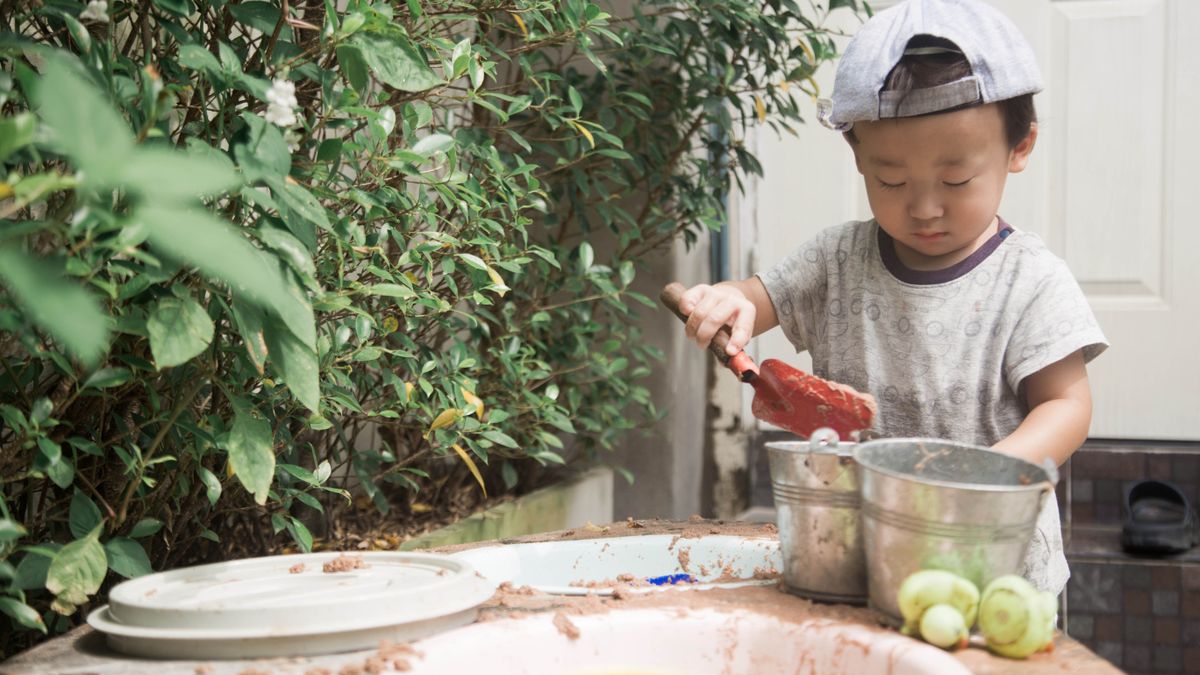
Photo by Micah Eleazar on Pexels
- Sourcing a base structure: an old cabinet, crate, or pallet frame
- Cutting and sanding wood to remove sharp edges and splinters
- Attaching a sink basin (often a repurposed bowl or bucket)
- Installing shelves, hooks, or a chalkboard for extra function
- Weatherproofing with outdoor-safe paint or sealant
- Anchoring or stabilizing the structure so it doesn't tip
On paper, this sounds straightforward. In practice, it demands real tools (a saw, drill, sander, and often a paint sprayer), a weekend or two of free time, and some basic carpentry know-how. If something goes wrong, like a wobbly leg or a poorly sanded edge, the fix falls entirely on you.
What Do You Get With a Ready-Made Mud Kitchen?
A ready-made mud kitchen arrives as a complete kit engineered specifically for outdoor play. Instead of piecing together mismatched parts, you get a cohesive unit designed around how kids actually play: pouring, mixing, stirring, and pretending. Most ready-made kitchens include:
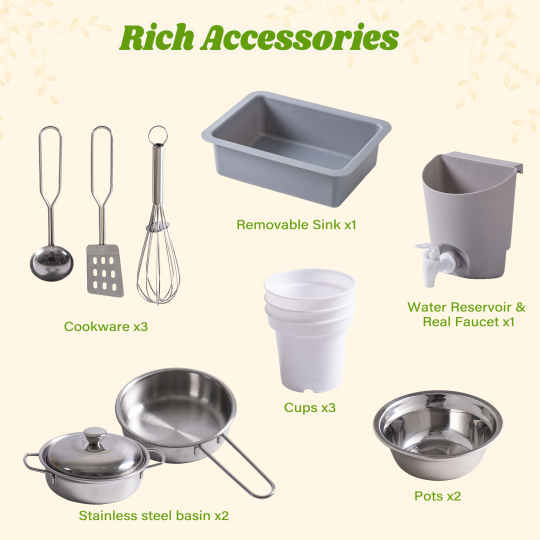
- A removable sink basin: for easy cleaning and water changes
- A working faucet or water-play feature: for realistic pretend cooking
- A built-in stovetop with knobs: for role-play cooking scenarios
- Shelving, hooks, and storage: for pots, pans, and pretend ingredients
- Pre-treated, weather-resistant wood: for standing up to sun and rain
- Rounded edges and non-toxic finishes: for everyday safety
Everything is pre-cut, pre-drilled, and tested as a system before it ships, so assembly is closer to following a furniture manual than building from scratch.
Explore Robud's Outdoor Mud Kitchen Collection
If the ready-made route sounds appealing, Robud's outdoor mud kitchen collection is built specifically for backyard mess-making. A few standout picks:
-
- ROBUD Outdoor Mud Kitchen with Real Water Play: A great choice for children who love combining mud, sand, and water. It features a functional faucet and sink, cooking accessories, gardening tools, and planting cups for varied sensory play.
![ROBUD Outdoor Mud Kitchen with Real Water Play]()
- ROBUD Mud Kitchen for Kids Outdoor with Canopy & Wheels: Ideal for flexible backyard play, with wheels for easier repositioning and a canopy that helps create a more comfortable play area.
![ROBUD Mud Kitchen for Kids Outdoor with Canopy & Wheels]()
- ROBUD Outdoor Mud Play Kitchen with Removable Sink: A practical option for messy play, featuring a removable sink alongside cooking areas and storage for keeping accessories organized.
![ROBUD Outdoor Mud Play Kitchen with Removable Sink]()
- ROBUD Outdoor Garden Mud Kitchen for Kids: A garden-inspired choice for children who enjoy mixing pretend cooking with outdoor exploration and nature-based play.
![ROBUD Outdoor Garden Mud Kitchen for Kids]()
- ROBUD Outdoor Mud Play Kitchen Green: A colorful outdoor play station for children who enjoy mud, water, pretend cooking, and imaginative garden play.
![ROBUD Outdoor Mud Play Kitchen Green]()
- ROBUD Outdoor Mud Kitchen - Caramel: A simple wooden design for families looking for a straightforward mud kitchen that blends naturally into a backyard or garden.
![ROBUD Outdoor Mud Kitchen - Caramel]()
- ROBUD Wooden Outdoor Kitchen Playset - Mud: Combines a removable sink, faucet, stovetops, cooking accessories, planting pots, and sprinklers for a mix of sensory, cooking, and gardening play.
![ROBUD Wooden Outdoor Kitchen Playset - Mud]()
- ROBUD Wooden Outdoor Pretend Play BBQ Grill Kitchen for Kids: A better fit for children who prefer pretend grilling and outdoor cooking over traditional mud-pie play.
![ROBUD Wooden Outdoor Pretend Play BBQ Grill Kitchen for Kids]()
- ROBUD Mud Kitchen for Kids Outdoor with Canopy: Adds a canopy to the play setup, making it a useful choice for families looking to create a dedicated outdoor cooking and sensory-play area.
![ROBUD Mud Kitchen for Kids Outdoor with Canopy]()
- ROBUD Outdoor Mud Kitchen with Real Water Play: A great choice for children who love combining mud, sand, and water. It features a functional faucet and sink, cooking accessories, gardening tools, and planting cups for varied sensory play.
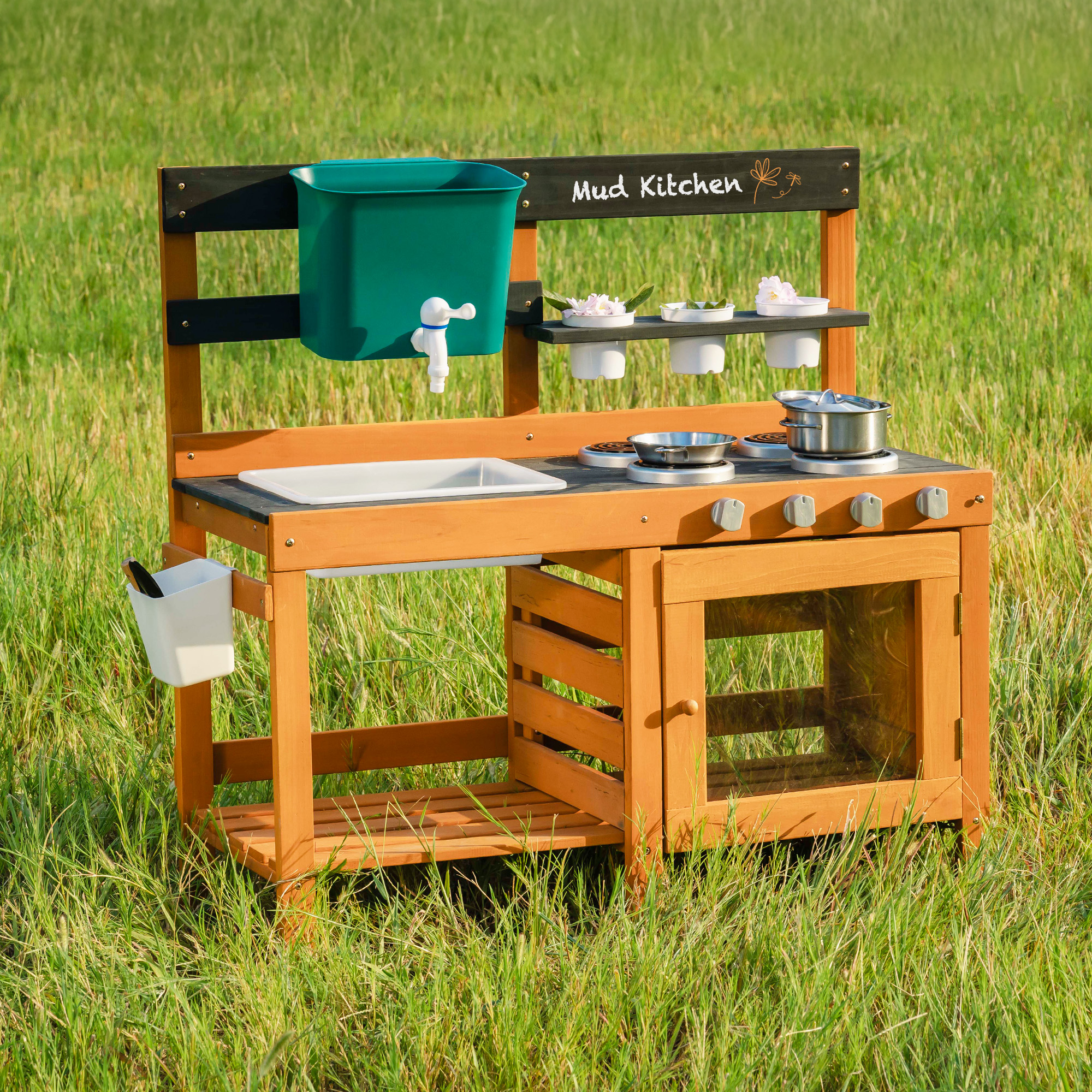
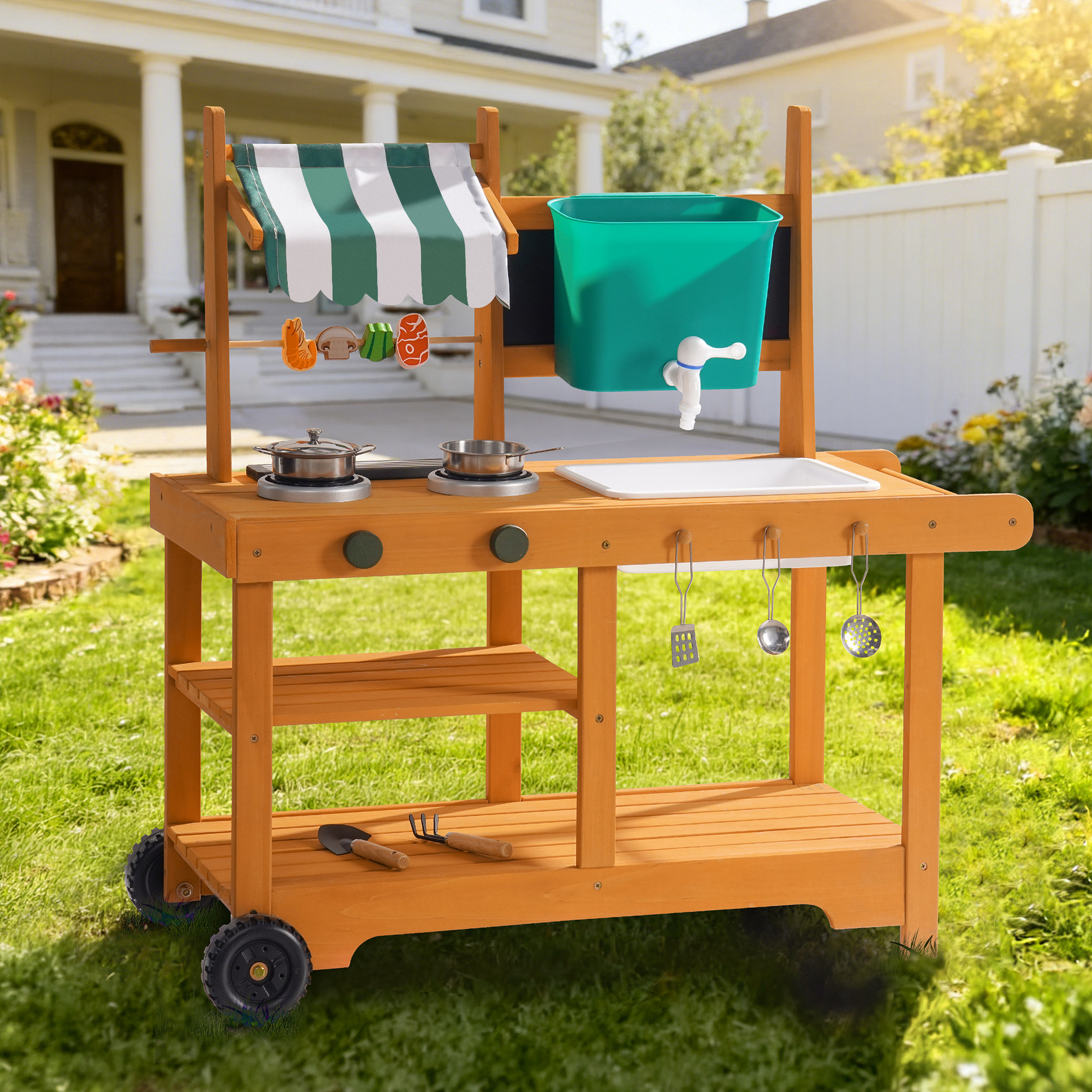
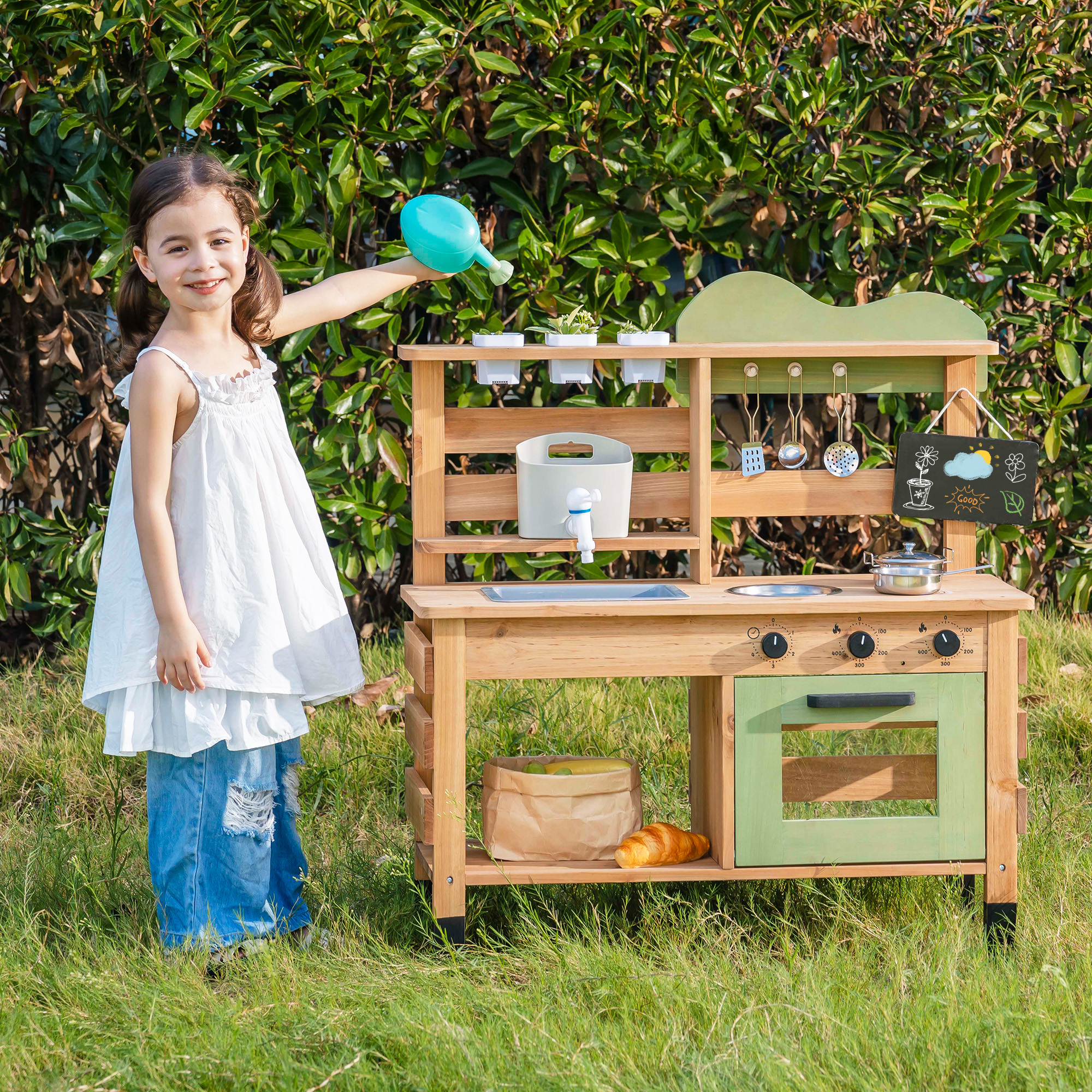
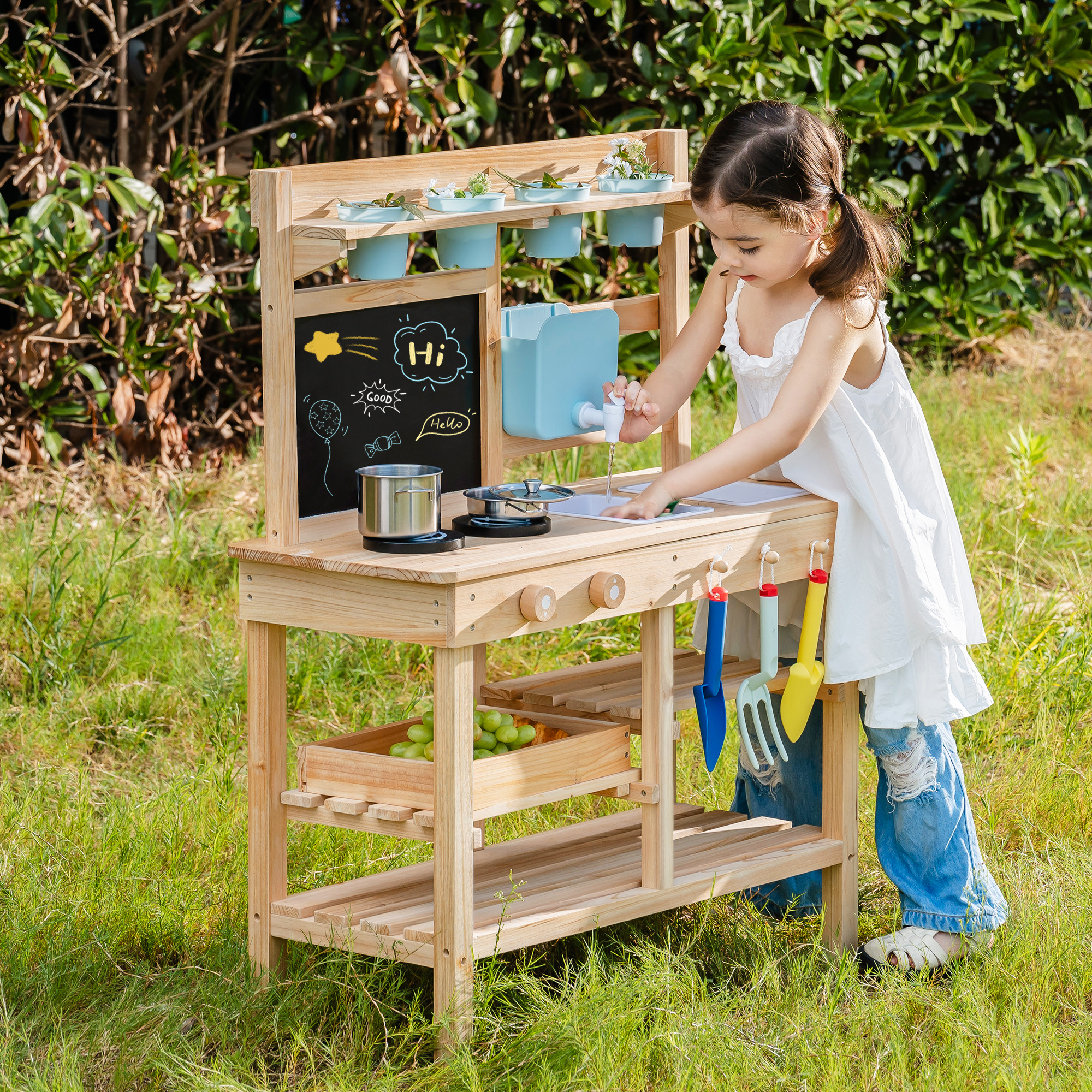
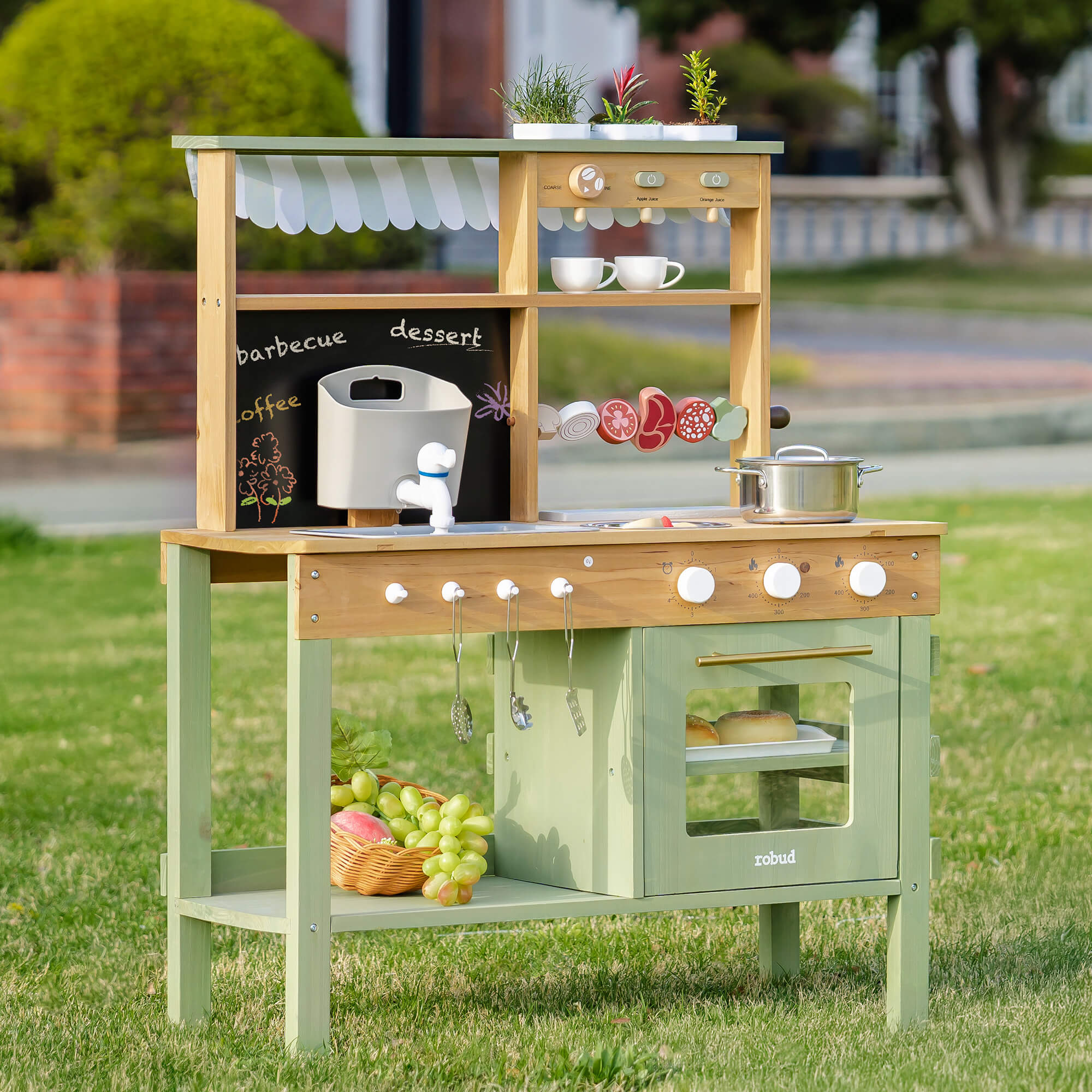
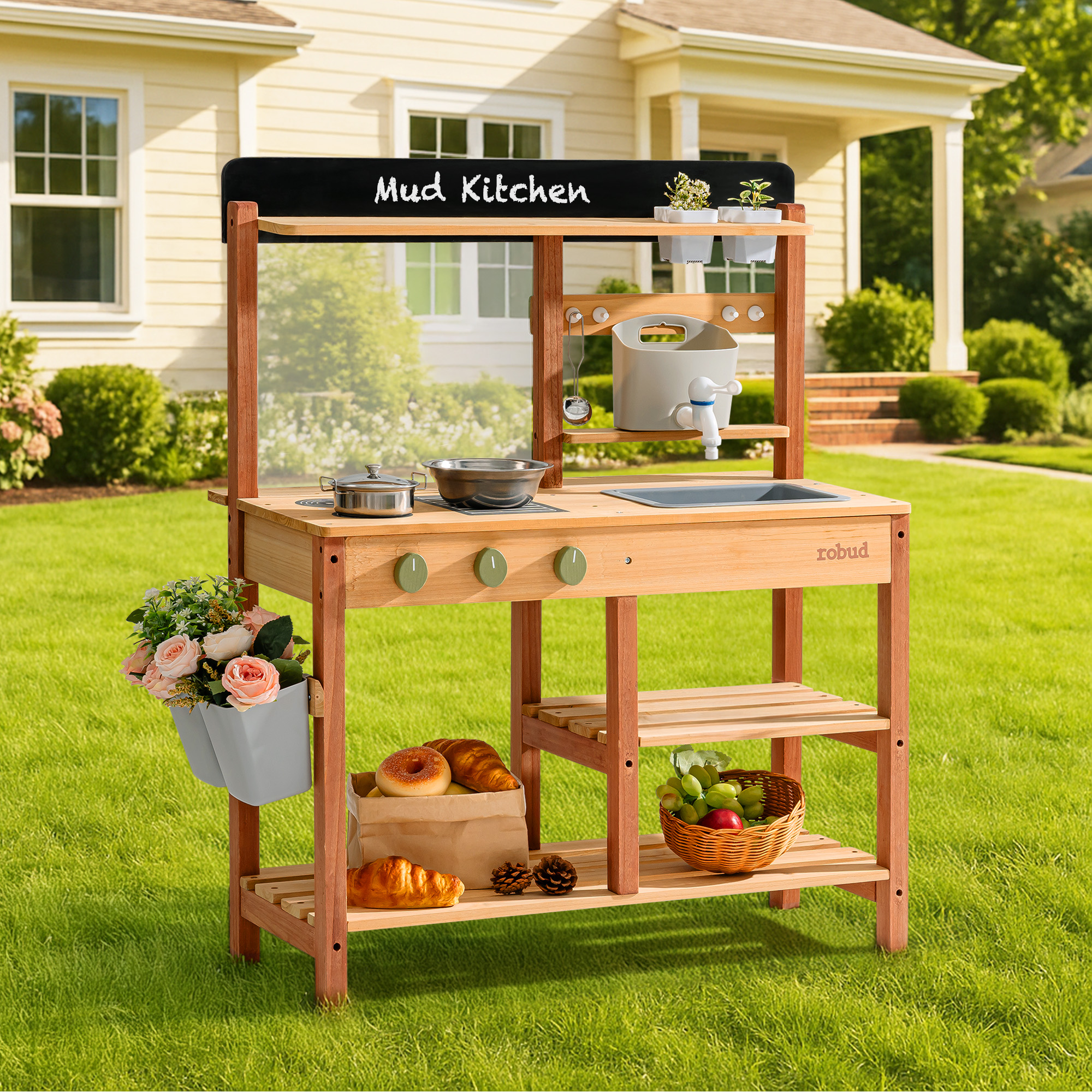
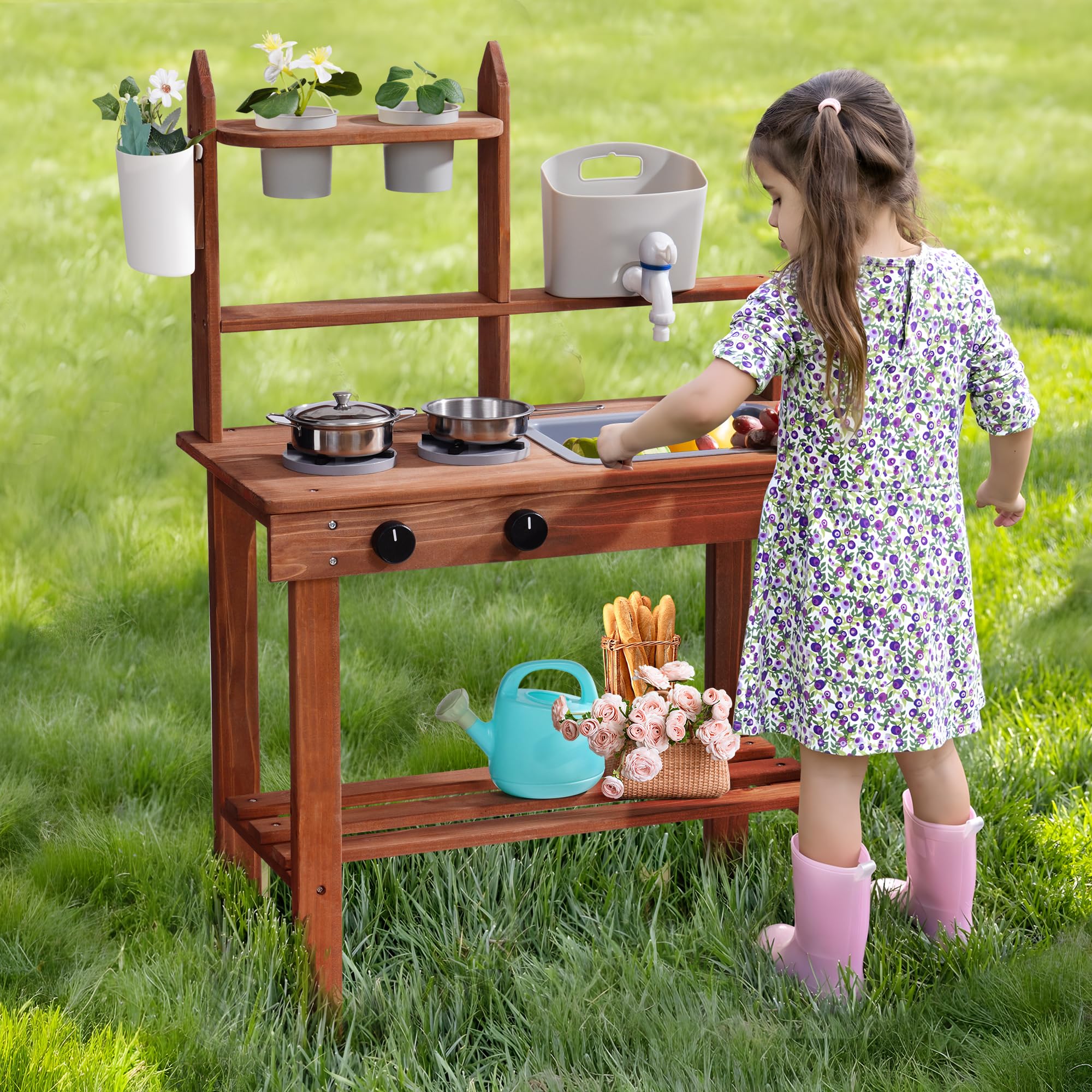
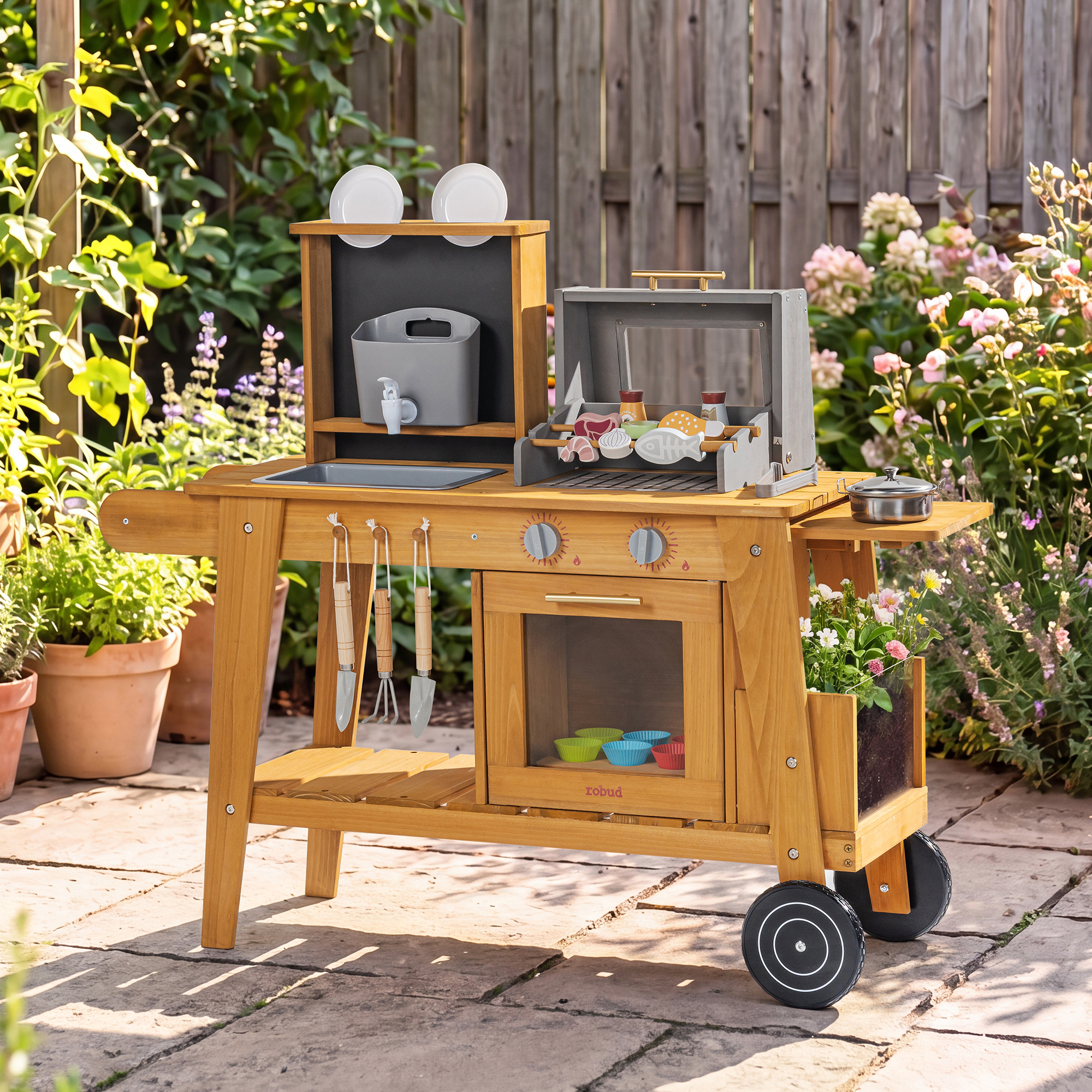
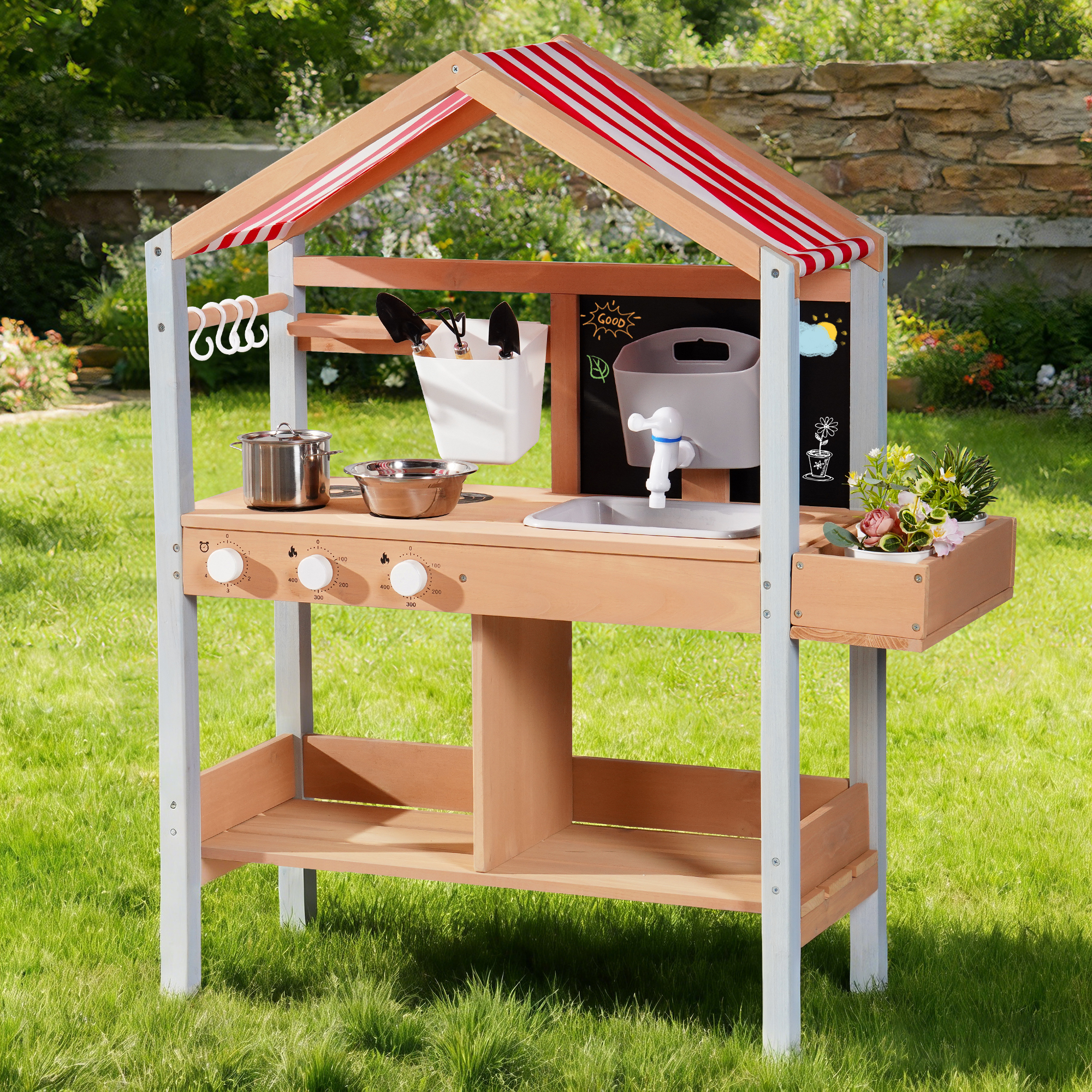
Each model varies in size, sink setup, and mobility, so it's worth comparing a few before deciding which fits your space.
DIY vs Ready-Made Mud Kitchen: Cost Comparison
Cost is usually the first factor parents weigh, and it's more nuanced than "DIY is cheaper."
A basic DIY build using a free or secondhand cabinet can cost very little in materials alone. But once you add a sink basin, faucet hardware, exterior paint, sealant, screws, and any replacement tools, the total climbs quickly. Add in the value of your own time, and a "free" pallet kitchen can end up costing nearly as much as a mid-range ready-made model.
Ready-made mud kitchens have a fixed, upfront price that already includes the sink, faucet, stovetop, and hardware. There are no surprise trips to the hardware store, and no guesswork about how much sealant a full build will actually need. For many families, this predictability is worth the price tag on its own.
Which Takes More Time?
Time is where the two options diverge the most.
A DIY build realistically takes anywhere from a full weekend to several weeks, depending on your schedule, tool access, and skill level. Between sourcing materials, cutting pieces, sanding, painting, and letting sealant cure, it's rarely a one-afternoon project.
A ready-made kitchen, by comparison, typically assembles in 30 minutes to an hour with basic tools like a screwdriver or Allen key. Most kits include step-by-step instructions, pre-drilled holes, and labeled parts, so there's little guesswork involved. If your family wants a mud kitchen in the yard by this weekend, ready-made is the far more realistic option.
Safety: DIY vs Ready-Made
Safety is where the stakes get real, and it's not a category to take lightly.
With a DIY mud kitchen, safety depends entirely on the builder's choices: the type of wood used, whether edges are properly sanded, whether paint is non-toxic and child-safe, and whether the structure is stable enough to resist tipping when a toddler leans on it. Reused materials like old furniture may also carry old paint, splinters, or weakened joints that aren't always obvious.
Ready-made mud kitchens go through structural and material testing before they ever reach a backyard. Reputable brands use non-toxic finishes, rounded edges, and stable bases designed to handle rough outdoor play. That said, "ready-made" doesn't mean "safe by default": it's still worth checking for safety certifications and age recommendations before buying.
Which Holds Up Better Outdoors?
Outdoor durability comes down to materials and construction, and this is another area where the two paths often diverge.
DIY kitchens built from repurposed furniture weren't originally designed for rain, sun, or humidity. Even with a coat of sealant, indoor-grade wood tends to warp, swell, or rot faster once it's exposed to the elements year-round. Reapplying sealant becomes an ongoing maintenance task.
Ready-made kitchens are typically built from wood that's treated or selected specifically for outdoor exposure, with finishes designed to resist moisture and fading. That doesn't make them maintenance-free, but it does mean they're engineered from the start to survive backyard conditions longer than a repurposed cabinet.
Customization: Where DIY Wins
This is the one category where DIY has a clear, uncontested advantage.
Building your own mud kitchen means every decision is yours: the size, the layout, the color scheme, the number of shelves, and even quirky extras like a chalkboard menu or a bell for "order up." You can design around a specific corner of the yard, match your home's exterior, or scale the whole thing up or down based on how many kids will use it.
Ready-made kitchens come in fixed configurations. You can choose between models with different features, like a canopy, wheels, or a bigger sink, but you're selecting from what's already designed rather than creating something from scratch.
Convenience and Features: Where Ready-Made Wins
If DIY wins on customization, ready-made wins on convenience.
- Ready-made kitchens arrive with features already integrated and tested together: a sink that actually fits its faucet, a stovetop sized to the counter, and shelving positioned at a height kids can reach. There's no trial and error involved in figuring out whether a repurposed bowl will sit level in a cut-out hole.
They also tend to include thoughtful extras that are hard to replicate in a DIY build, like:
- Removable sinks: for pouring out water without tipping the whole unit
- Wheels: for moving the kitchen around the yard as needed
- Canopies: for shade during long play sessions
- Included accessories: like pots, pans, and utensils, so kids can start playing immediately
For parents who want the mud kitchen experience without project management, this is the deciding factor.
DIY or Ready-Made: Which Should You Choose?
There's no single right answer, but a few questions can help narrow it down:
- Do you enjoy hands-on building projects and already own basic tools: if yes, DIY could be a rewarding weekend project
- Is your timeline tight, or do you want play to start this week: ready-made is the faster path
- Are you working with a specific budget you don't want to exceed: compare true DIY costs (materials plus hardware) against ready-made pricing before deciding
- Do you want a completely custom design, or are you fine choosing from existing models: this alone often settles the debate
If the process of building is part of the appeal, DIY delivers that. If the goal is simply to get kids outside and playing as soon as possible, a ready-made kitchen removes the guesswork.
Making Either Mud Kitchen More Fun
Whichever route you take, a few additions can make the mud kitchen experience richer:
- Natural ingredients: like flowers, leaves, pinecones, and pebbles for "cooking"
- Real (child-safe) kitchen tools: like measuring cups, whisks, and mixing bowls
- A designated "ingredient station": stocked with sand, dirt, and water nearby
- Rotating seasonal themes: like autumn leaf soup or summer flower salads
- A chalkboard menu: so kids can "write up" their daily specials
Small additions like these keep play fresh long after the initial excitement of a new mud kitchen wears off.
FAQs
Is a DIY mud kitchen cheaper than a ready-made one?
Not always. A basic DIY build can start cheaper, but once you add a sink, faucet, paint, sealant, and hardware, the cost often lands close to a mid-range ready-made kitchen, especially after factoring in your time.
How long does it take to build a DIY mud kitchen?
Most DIY builds take a full weekend at minimum, and often longer once painting and sealant curing time are included. Ready-made kitchens typically assemble in under an hour.
Are ready-made mud kitchens safe for toddlers?
Reputable ready-made kitchens are designed with rounded edges, non-toxic finishes, and stable bases suited for young children, but it's still worth checking the manufacturer's age recommendations and safety certifications before buying.
Can I customize a ready-made mud kitchen after buying it?
Yes, to an extent. Many parents add extra hooks, chalkboards, or planter boxes to a ready-made base. You just won't have the same freedom to change the core structure as you would with a DIY build.
What materials last longest outdoors?
Wood specifically treated or selected for outdoor use holds up best against rain, sun, and humidity. Indoor furniture repurposed for outdoor use, even with sealant, tends to degrade faster over time.
Comentario