 United States
 United Kindom
 Canada
 Europe
 France
 Spain
Spain
 Italy
Italy
 Australia
How to Choose the Best Toy Tool Bench for a 3-Year-Old?
Jul 29,2026
Three-year-olds are naturally curious. They love taking things apart, copying what adults do, and figuring out how objects work. That's why a toy tool bench is more than just another toy. It gives children a safe, hands-on way to build, pretend, and explore while developing valuable skills through play.
The challenge is choosing one that's actually suitable for a preschooler. Some workbenches are too complicated, too flimsy, or packed with tiny pieces that aren't ideal for younger children.
In this guide, you'll learn what makes a great toy tool bench for a 3-year-old, the benefits it offers, and which Robud workbenches are worth considering.
Why Is a Toy Tool Bench a Great Toy for a 3-Year-Old?
At age three, children are entering an exciting stage of development. Their imagination is growing quickly, they're becoming more confident with their hands, and they love role-playing everyday activities.
A toy tool bench brings all of these interests together.
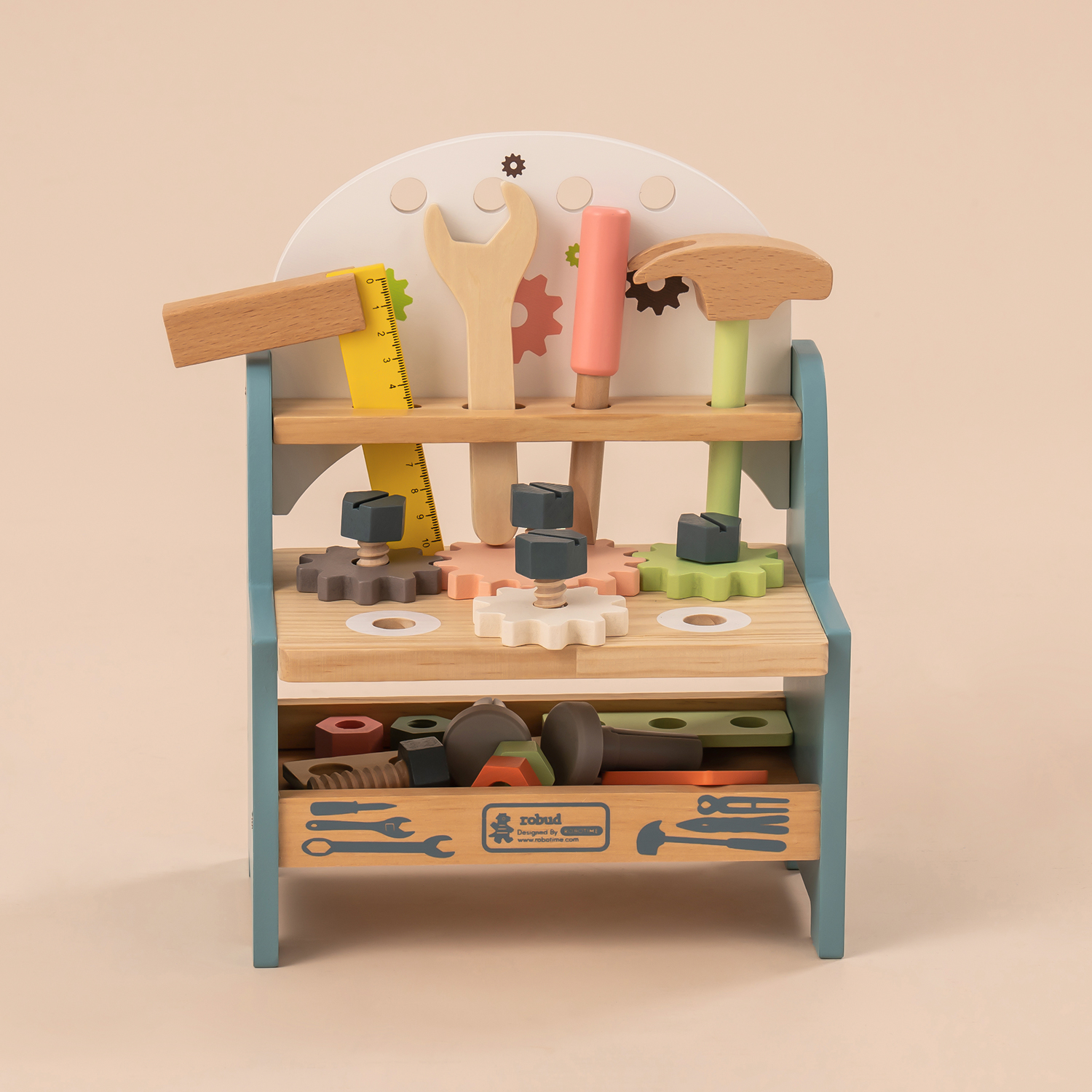
Instead of simply pressing buttons or watching lights flash, children become active participants. They can tighten bolts, hammer pegs, measure pieces, organize tools, and pretend to build everything from houses to race cars.
This type of open-ended play keeps children engaged much longer because there's no single "correct" way to play. Every building project becomes a new adventure.
A quality workbench also grows alongside a child. While a 3 year old may start by learning the names of tools, they'll gradually begin following simple building challenges, creating their own inventions, and telling imaginative stories around their creations.
Parents also appreciate that a workbench encourages independent play while reducing screen time.
Some of the biggest benefits include:
- Encourages imaginative role play
- Supports hands-on learning
- Builds confidence through problem-solving
- Improves concentration
- Promotes creativity instead of passive entertainment
- Makes learning feel like play
Unlike many electronic toys that lose their appeal after a few weeks, a well-made toy workbench often remains a favorite for years.
What Skills Can Kids Learn From a Toy Workbench?
A toy workbench may look simple, but it supports several important areas of early childhood development.
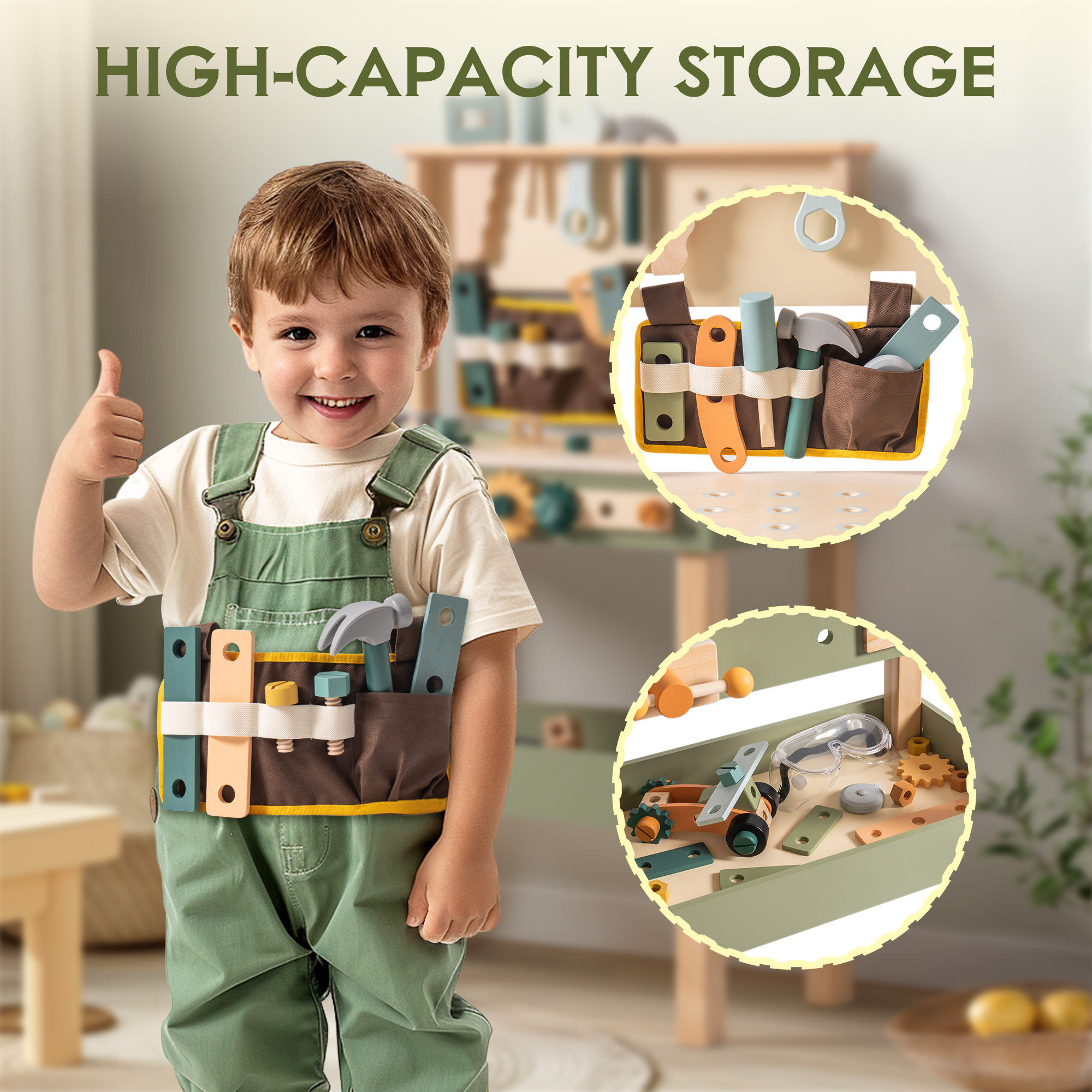
Fine Motor Skills
Turning screws, using a toy screwdriver, tapping with a hammer, and fitting pieces together strengthen the small muscles in children's hands.
These movements help prepare kids for writing, drawing, buttoning clothes, and many everyday tasks they'll encounter in preschool.
The more opportunities children have to practice these motions, the stronger their hand-eye coordination becomes.
Problem-Solving Skills
Building rarely goes perfectly the first time.
Children quickly learn to ask questions like
- Why doesn't this piece fit?
- Which screw should I use?
- How can I make this stand up?
Finding answers encourages logical thinking without making learning feel like work.
Creativity and Imagination
One day the workbench becomes a repair shop.
The next day it's a construction site.
Later, it transforms into a race car garage.
Pretend play allows children to invent stories, solve imaginary problems, and explore different roles. This kind of imaginative thinking supports creativity that extends far beyond playtime.
Hand-Eye Coordination
Every successful hammer strike, tightened bolt, or balanced construction requires children to coordinate what they see with how they move. These activities naturally improve coordination through repetition.
Patience and Focus
Building projects encourages children to slow down and work step by step. Instead of jumping from one activity to another, many preschoolers happily spend long periods experimenting with different tools and designs. Learning to stay focused is an important skill they'll use throughout school.
Communication and Social Skills
Toy workbenches become even more engaging when children play together. One child might act as the builder while another becomes the customer requesting repairs. Sharing tools, explaining ideas, and working together help children practice communication, cooperation, and taking turns.
What to Look for in a Toy Tool Bench for a 3-Year-Old
Not every workbench is designed with preschoolers in mind. Here are the most important features to consider before buying one.
Safety Comes First
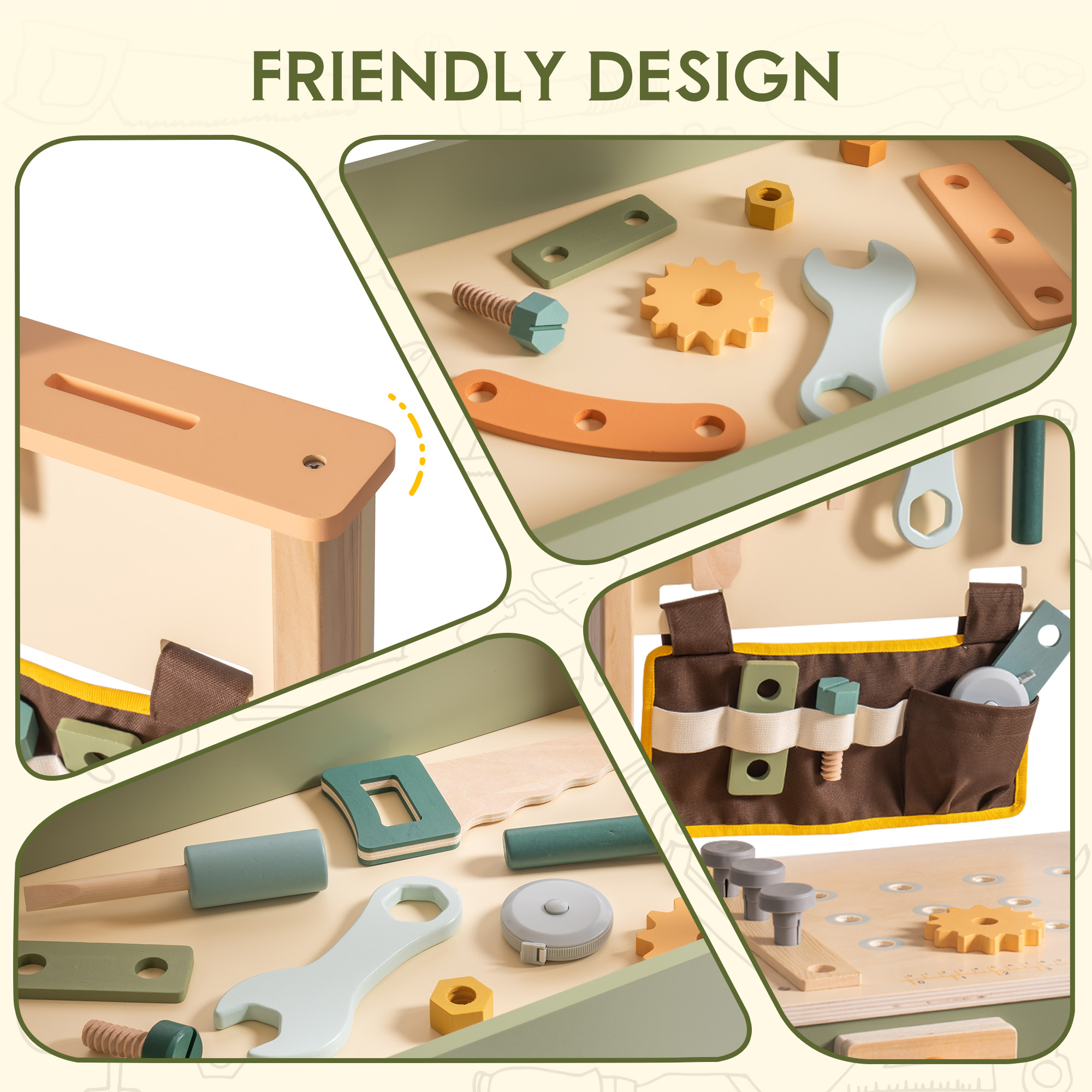
Safety should always be the top priority. Choose a toy tool bench that
- Uses non-toxic, child-safe finishes
- Has smooth, rounded edges
- Includes sturdy construction
- Avoids sharp corners
- Contains appropriately sized accessories that aren't choking hazards
Well-built wooden workbenches often provide excellent stability during energetic play.
Age-Appropriate Design
A 3-year-old doesn't need dozens of complicated parts.
Instead, look for:
- Easy-to-grip tools
- Simple assembly activities
- Large screws and bolts
- Bright colors
- Clearly organized storage areas
A workbench that's too advanced may frustrate younger children rather than encourage them.
Durable Materials
Children aren't always gentle with their toys. A durable workbench should withstand years of hammering, lifting, rebuilding, and pretend construction without falling apart.
Solid wood is particularly popular because it resists wear better than many lightweight plastic alternatives.
Plenty of Accessories
The best workbenches include more than just a table.
Useful accessories often include:
- Toy hammer
- Screwdriver
- Wrench
- Saw
- Screws
- Nuts
- Bolts
- Building blocks
- Measuring ruler
- Storage shelves
The more building options available, the longer children remain interested.
Easy Storage
Three-year-olds are still learning how to tidy up. Built-in shelves, hanging hooks, drawers, and storage compartments make cleanup easier while also teaching organizational skills.
Room to Grow
Children develop quickly. A versatile workbench should continue offering new ways to play even after your child turns four or five. Look for sets that encourage open-ended construction rather than requiring children to build only one specific project.
Wooden vs. Plastic Toy Tool Benches: Which Is Better?
Both wooden and plastic workbenches have their strengths. The best choice depends on your family's priorities.
| Feature | Wooden Toy Tool Bench | Plastic Toy Tool Bench |
|---|---|---|
| Durability | Extremely sturdy and long-lasting | Can crack or wear faster with heavy use |
| Appearance | Classic, realistic look | Bright, colorful designs |
| Stability | Heavier and less likely to tip | Lightweight and easier to move |
| Sustainability | Often made from renewable materials | Usually petroleum-based plastic |
| Sensory Experience | Natural wood texture feels realistic | Smooth plastic surface |
| Longevity | Often lasts through multiple children | May show wear sooner |
Best Robud Toy Tool Bench for 3-Year-Olds
Robud designs wooden pretend play toys that combine durability, educational value, and imaginative fun. Their workbenches are made with child-friendly features and realistic accessories that encourage hands-on learning.
Here are four excellent choices from the Robud Play Tools collection.
1. ROBUD Wooden Kids Tool Bench - Avocado Green
The ROBUD Wooden Kids Tool Bench - Avocado Green combines a modern color palette with a feature-rich design that keeps little builders engaged. The spacious work surface includes realistic toy tools and plenty of building accessories, allowing children to hammer, tighten screws, and assemble simple creations just like a real carpenter. Open shelves and hanging storage also make it easy for kids to organize their tools after every project.
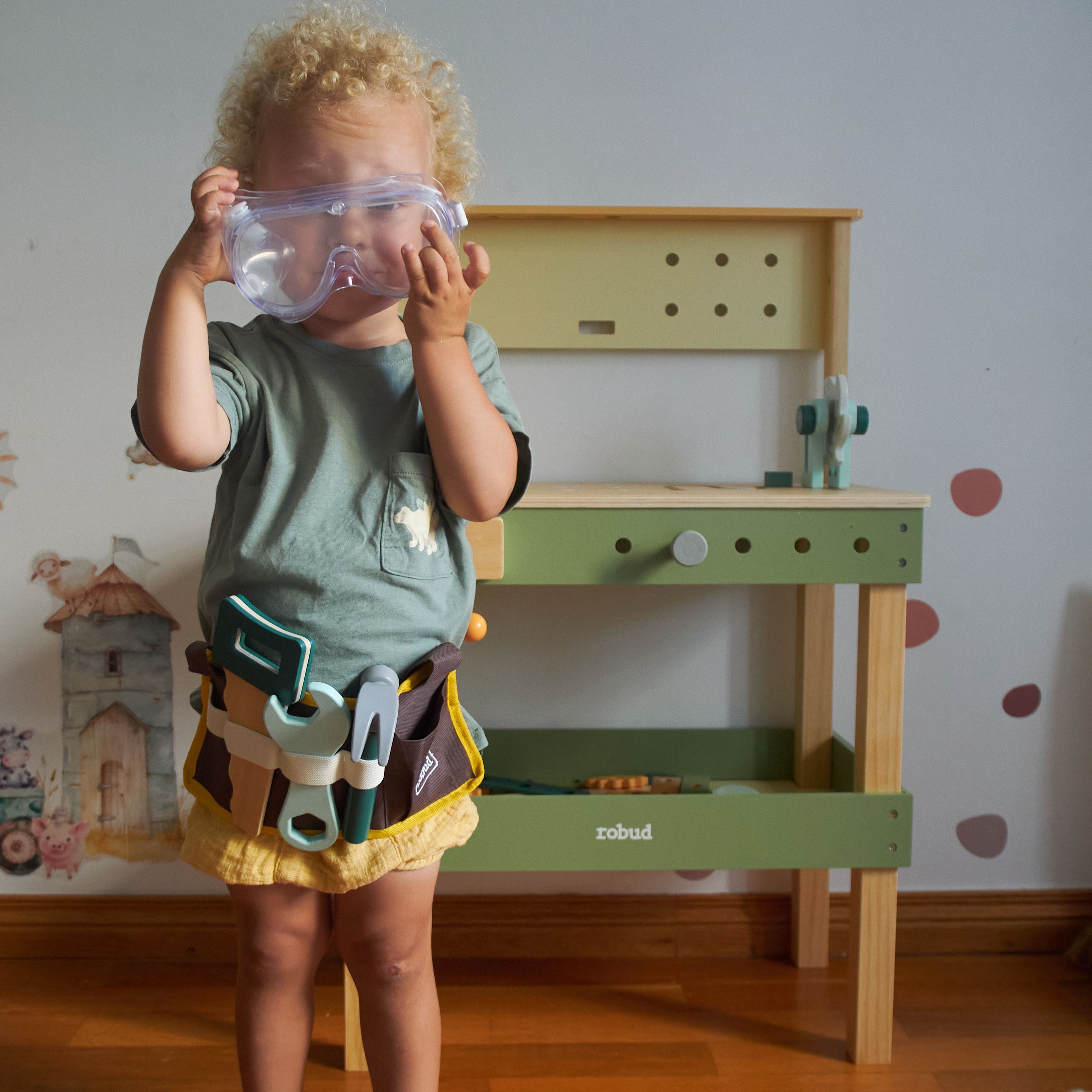
For a 3 year old, this workbench offers an excellent balance of fun and learning. Using the hammer, wrench, screwdriver, and other accessories helps strengthen fine motor skills while encouraging problem-solving and imaginative role play. Its sturdy wooden construction provides stability during active play, while the rounded edges and child-safe materials offer parents extra peace of mind. The stylish avocado green finish also makes it an attractive addition to a playroom or bedroom.
2. ROBUD Wooden Toy Workbench - Misty Blue
The ROBUD Wooden Toy Workbench - Misty Blue offers the same engaging building experience in a soft, modern blue finish. Designed with preschoolers in mind, it features a realistic workstation complete with toy construction tools, screws, nuts, gears, and storage compartments. Children can pretend to repair household items, build imaginative projects, or simply enjoy experimenting with different tool combinations.
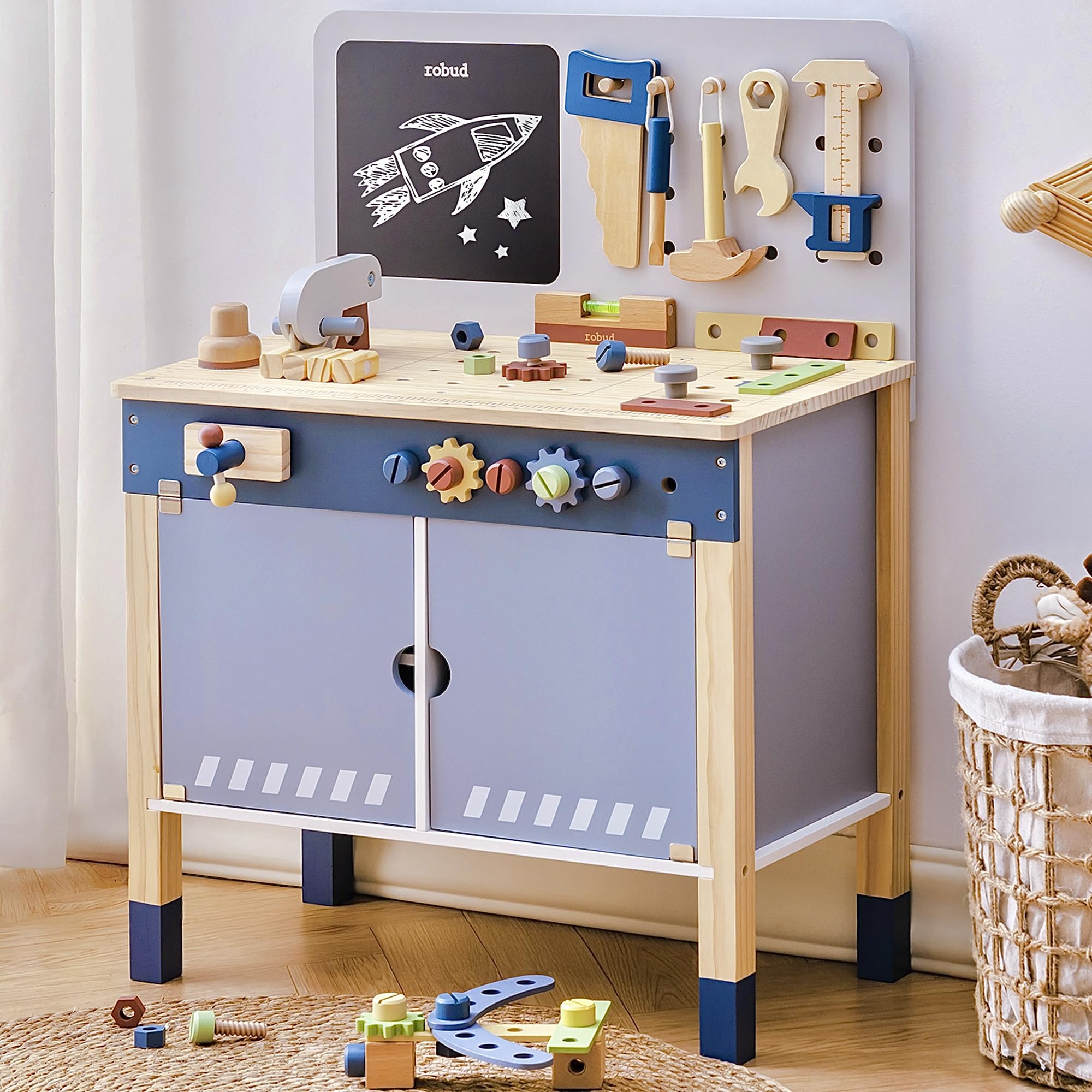
Beyond pretend play, this workbench encourages valuable developmental skills. Turning bolts, matching pieces, and assembling simple structures improve hand-eye coordination and finger strength, while role-playing as a builder helps develop language and social skills. The sturdy wooden frame is built to withstand years of enthusiastic play, making it a toy that can grow with your child rather than being outgrown after a few months.
3. ROBUD Toy Workbench Tool Bench Set for Kids
The ROBUD Toy Workbench Tool Bench Set for Kids is a complete pretend construction station designed to inspire creativity. It comes with a generous selection of toy tools and construction accessories that encourage children to build, take apart, and rebuild different projects. The realistic design makes kids feel like they're working at a real workshop, adding excitement to every play session.
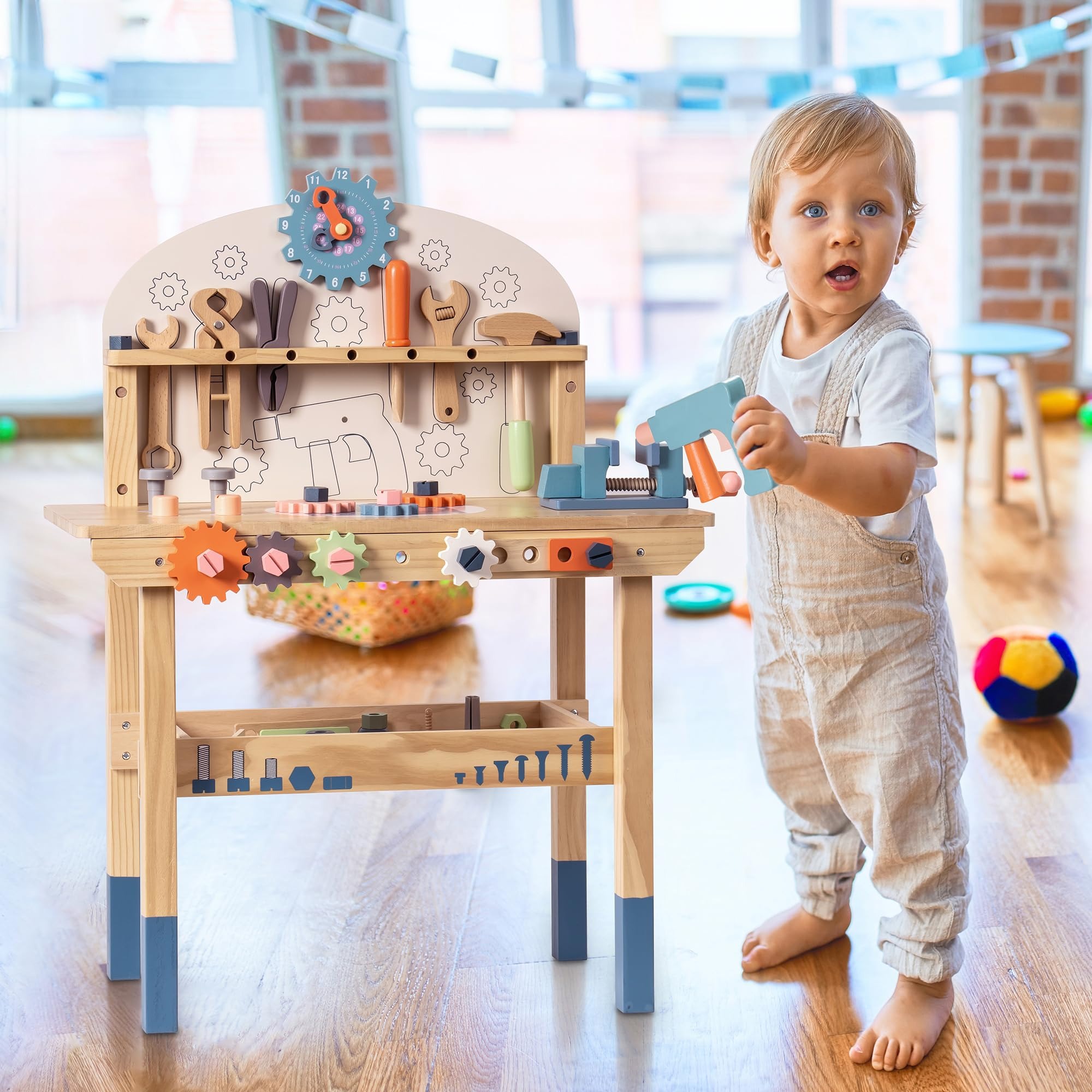
This workbench is particularly well suited to open-ended play because there isn't just one way to use it. Children can invent their own building challenges, repair imaginary objects, or work alongside siblings and parents on pretend DIY projects. Along the way, they naturally develop concentration, logical thinking, and confidence as they complete each task. Its durable wooden construction and child-friendly finish also make it a practical choice for everyday use.
4. ROBUD Mini Wooden Play Tool Workbench Set
Families looking for a more compact option should consider the ROBUD Mini Wooden Play Tool Workbench Set. Although smaller than a full-sized workbench, it still provides everything young builders need for imaginative construction play. The set includes a miniature workbench along with essential pretend tools and building accessories, making it ideal for toddlers who are just beginning to explore tool-based role play.
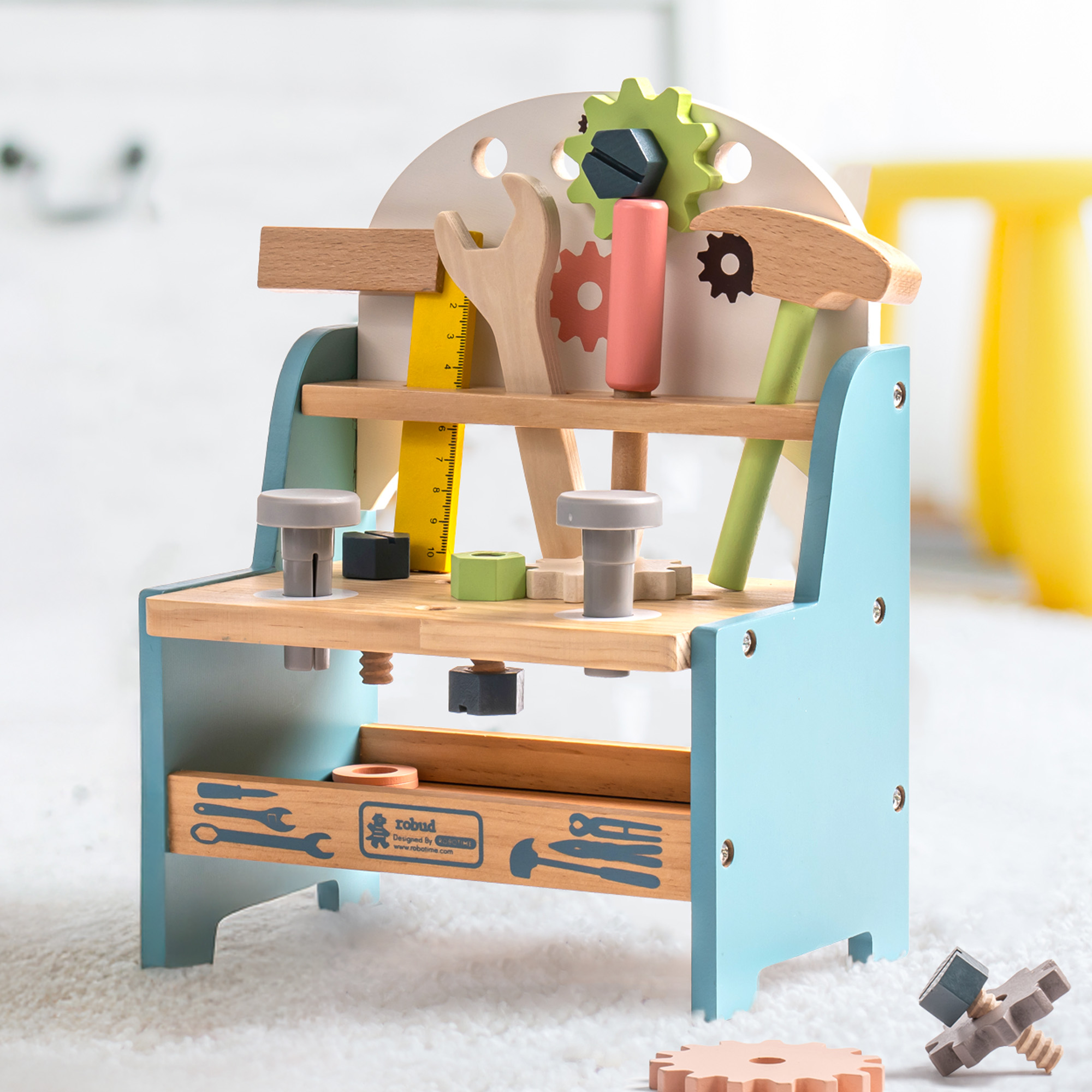
Its compact footprint makes it especially suitable for apartments, bedrooms, or play areas where space is limited. The smaller size also allows children to comfortably reach every tool and accessory without feeling overwhelmed. Despite its portability, the set still promotes important developmental skills such as fine motor control, hand-eye coordination, creativity, and independent play. It's an excellent starter workbench for younger children or a convenient option for families who want a toy that's easy to move and store.
Final Thoughts
Choosing the best toy tool bench for a 3-year-old isn't just about finding the biggest set or the one with the most accessories. The best option is one that's safe, durable, age-appropriate, and engaging enough to inspire hours of imaginative play.
A well-designed workbench helps children strengthen fine motor skills, solve problems, develop creativity, and build confidence while having fun. It's a toy that grows with them, offering new ways to play as their abilities develop.
If you're looking for a thoughtfully designed wooden option, Robud's collection of toy tool benches offers excellent choices for young builders. Whether your child dreams of fixing, building, or inventing, the right workbench can turn everyday play into meaningful learning experiences.
Enviar comentário