 United States
 United Kindom
 Canada
 Europe
 France
 Spain
Spain
 Italy
Italy
 Australia
Push Walker vs. Seated Walker: Which Is Better for Your Baby?
Sep 08,2026
Watching a baby figure out how to move on two feet is one of those milestones that sneaks up on parents fast. One week they're cruising along the couch, the next they're eyeing the open floor like it's a challenge. That's usually when the walker question comes up: push walker or seated walker?
The two look similar at a glance, but they work in completely different ways, and pediatric guidance on them isn't the same either. This guide breaks down what each one actually does, what the research says about safety and development, and how to pick the right option (and the right features) for your baby's stage.
What Is a Push Walker?
A push walker is a stable, wheeled frame that a baby stands behind and pushes forward while walking upright on their own two feet. There's no seat and no suspending the baby's weight in fabric. The baby is fully in control of the pace, the direction, and the stopping.
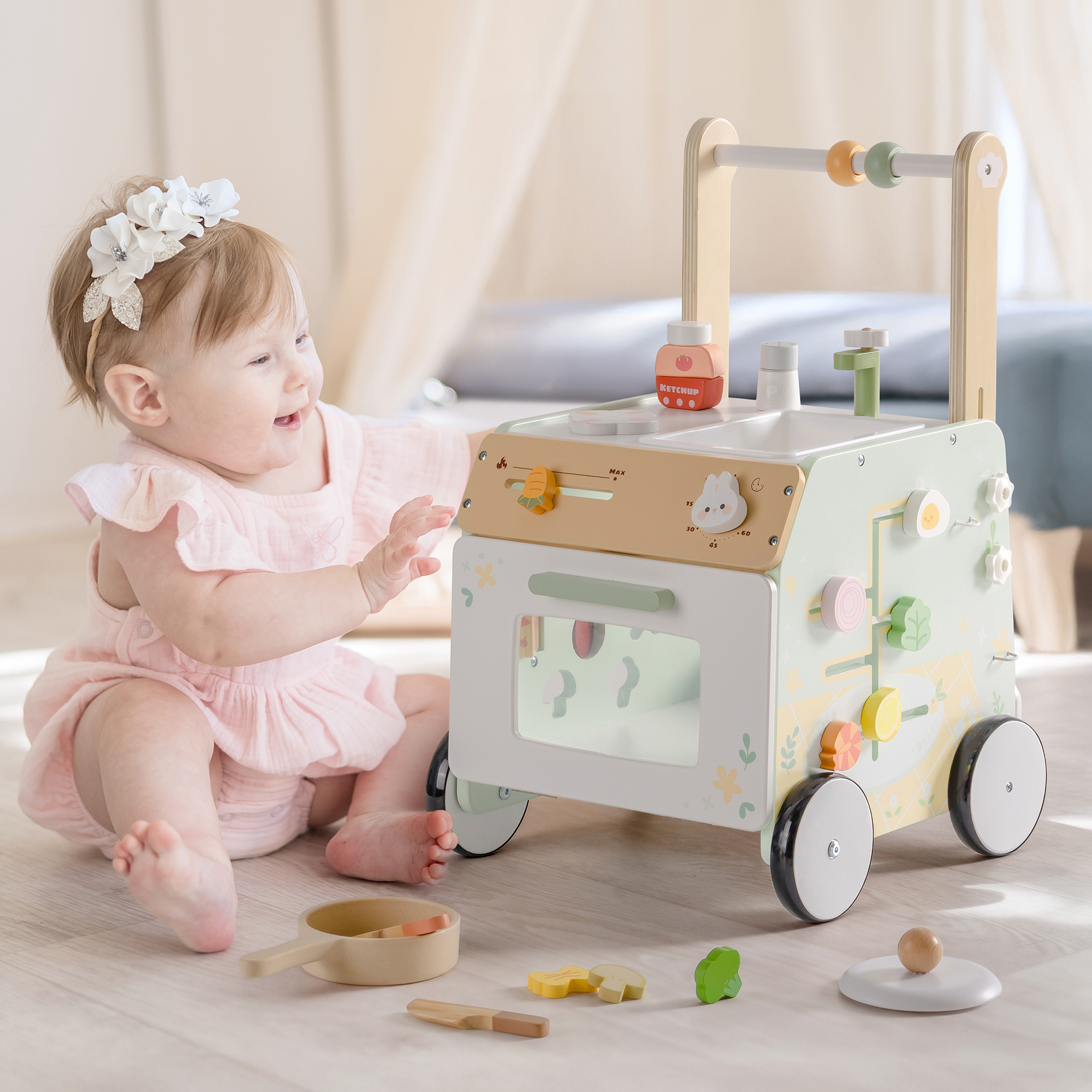
Most push walkers on the market today are multi-purpose toys as much as they are mobility tools. They often include:
- An activity panel with gears, beads, or shape sorters: to keep babies engaged before they're steady enough to walk with it
- Adjustable rolling resistance: to slow the wheels down for a beginner and speed them up as confidence grows
- A low center of gravity and wide wheelbase: to resist tipping when a baby leans on the handle
- A storage compartment or cart-style body: to double as a toy hauler once walking is more established
Because the baby is bearing their own weight and using their own legs the entire time, a push walker functions more like a walking assistant than a walking substitute.
What Is a Seated Walker?
A seated walker is the style most people picture when they hear "baby walker": a frame on wheels with a fabric seat suspended in the middle, letting the baby sit with their feet touching the ground and scoot around by pushing off with their toes.
Unlike a push walker, a seated walker holds the baby's weight for them. The baby doesn't need to balance, stand independently, or coordinate a full walking motion, because the seat and frame are doing that work. This is the main reason seated walkers have become controversial among pediatric health organizations, which we'll get into below.
Seated walkers are typically used earlier, often starting around 4 to 5 months once a baby has decent head and neck control, since the seat provides most of the support.
Push Walker vs. Seated Walker: Key Differences
Here's how the two stack up side by side:
- Support level: A push walker requires the baby to stand and balance independently, while a seated walker supports the baby's full body weight in a suspended seat
- Muscle engagement: Push walkers work the legs, core, and balance muscles the same way real walking does, while seated walkers let babies scoot using mostly the toes and ankles
- Mobility speed: Seated walkers can move quickly across a room since they roll on wheels with toe-pushes, while push walkers move at a pace the baby's own legs can manage
- Starting age: Push walkers are generally introduced once a baby can pull up to stand, often around 9 months, while seated walkers are often used earlier, from about 4 to 5 months
Are Push Walkers Better for Learning to Walk?
It depends on the baby, but a push walker can offer a helpful in-between step once a baby is already pulling up to stand and cruising along furniture. Unlike a seated walker, it doesn't hold the baby's weight for them, so any movement across the floor is still the baby standing, shifting their own weight, and taking their own steps, just with a frame to hold onto for extra support.
That makes a push walker more of an opportunity than a shortcut. It can give a baby who's physically ready a chance to practice standing, stepping, balance, and coordination with a bit of hand support, at their own pace and on their own two feet.
That said, a push walker isn't a requirement for learning to walk, and it's not a substitute for a baby's own readiness. Plenty of babies walk just fine without one. It's best introduced once a baby is already showing the signs of being ready to stand and cruise, rather than used to encourage a baby to walk before they're there.
Are Seated Baby Walkers Safe?
This is where the two products really part ways. Seated walkers have been the subject of safety warnings for years, and the concerns aren't minor.
Because a seated walker lets a baby move quickly, sometimes several feet per second, before they have the judgment or reflexes to manage that speed, falling down stairs is a well-documented risk.
A few of the specific concerns raised include:
- Stair falls: A seated walker can carry a baby to a staircase edge faster than a parent can react
- Access to hazards: The added height and mobility let babies reach hot stoves, cords, or cleaning supplies they couldn't otherwise get to
- Tipping risk: Uneven flooring, thresholds, or rugs can catch a wheel and tip the frame
None of this means every seated walker's use ends badly. Millions of babies have used them without incident.
When Can a Baby Start Using a Push Walker?
Most push walkers are designed for babies around 9 to 12 months, though the real marker isn't age, it's physical readiness. A baby is generally ready for a push walker once they can:
- Pull themselves up to standing: without needing a hand from a parent
- Stand while holding onto furniture: for at least a few seconds without wobbling badly
- Cruise along furniture: shuffling sideways while holding on for support
- Bear full weight on their legs: without their knees buckling
How to Choose a Push Walker
Not all push walkers are built the same, and the right one really depends on your baby's current stage. A few things worth checking before buying:
- Stability first: Look for a wide wheelbase and low center of gravity, since a walker that tips easily defeats the purpose of giving your baby something safe to lean on
- Adjustable speed or resistance: A walker that lets you slow the wheels down is more forgiving for beginners and grows with your baby as they get steadier
- Weight and height range: Confirm the walker suits your baby's current size, not just their age, since babies grow at different rates
- Rounded edges and non-toxic finishes: Babies fall against these frames constantly, so smooth edges and safe paint or wood finishes matter
- Bonus play features: Activity panels, storage bins, or cart-style designs keep the walker useful well past the "first steps" phase, since toddlers often keep pushing them around as toy haulers
Explore Robud's Wooden Baby Push Walkers
Robud makes a range of wooden push walkers designed to support those first wobbly steps while doubling as long-lasting activity toys. Here's a look at some of the styles in the collection:
- ROBUD Wooden Baby Push Walker - Spring Countryside: This countryside-themed walker pairs a sturdy frame with farm-style activity details, making it a good pick for parents who want a walker that keeps toddlers entertained long after they've mastered walking with it.
![ROBUD Wooden Baby Push Walker - Spring Countryside]()
- ROBUD Wooden Baby Push Walker - Underwater World: Featuring an ocean-themed activity panel, this walker gives beginner walkers something colorful and hands-on to focus on while they build up leg strength and balance.
![ROBUD Wooden Baby Push Walker - Underwater World]()
- ROBUD Forest Fairy Baby Push Walker: A softer, nature-inspired design with a stable frame, ideal for parents looking for a gentle aesthetic alongside dependable support during early walking practice
![ROBUD Forest Fairy Baby Push Walker]()
- ROBUD Wooden Pink Baby Push Walker: A lightweight, easy-to-grip walker with a classic look, well suited to babies just starting to cruise along furniture and needing extra hand support.
![ROBUD Wooden Pink Baby Push Walker]()
- ROBUD Wooden Baby Push Walker - Forest Vitality: This stroller-style walker combines a wide wheelbase with a woodland theme, making it a solid option for babies who need a bit more stability while they find their footing.
![ROBUD Wooden Baby Push Walker - Forest Vitality]()
- ROBUD Wooden Baby Push Walker - Rattan: With a wicker-inspired finish, this walker brings a natural, furniture-like look to the nursery while still offering the same sturdy push-walking support.
![ROBUD Wooden Baby Push Walker - Rattan]()
- ROBUD Wooden Baby Push Walker - Green Farm: A farm cart-style walker with room for toys and blocks, ideal for toddlers who want to keep "shopping" or hauling items around the house after they've learned to walk.
![ROBUD Wooden Baby Push Walker - Green Farm]()
- ROBUD Wooden Baby Push Walker - Vacation Bus: This adjustable-speed walker is built for the full learning curve, with resistance that can be tightened for beginners and loosened as steps get steadier.
![ROBUD Wooden Baby Push Walker - Vacation Bus]()
- ROBUD Wooden Push Forest King Shopping Cart Walker: Designed like a mini shopping cart, this walker is a favorite for toddlers who enjoy pretend play as much as the walking practice itself.
![ROBUD Wooden Push Forest King Shopping Cart Walker]()
- ROBUD Wooden Baby Walker with Garden Activity Center: This one adds a built-in activity center with garden-themed elements, giving babies something to explore with their hands before and after they're steady on their feet.
![ROBUD Wooden Baby Walker with Garden Activity Center]()
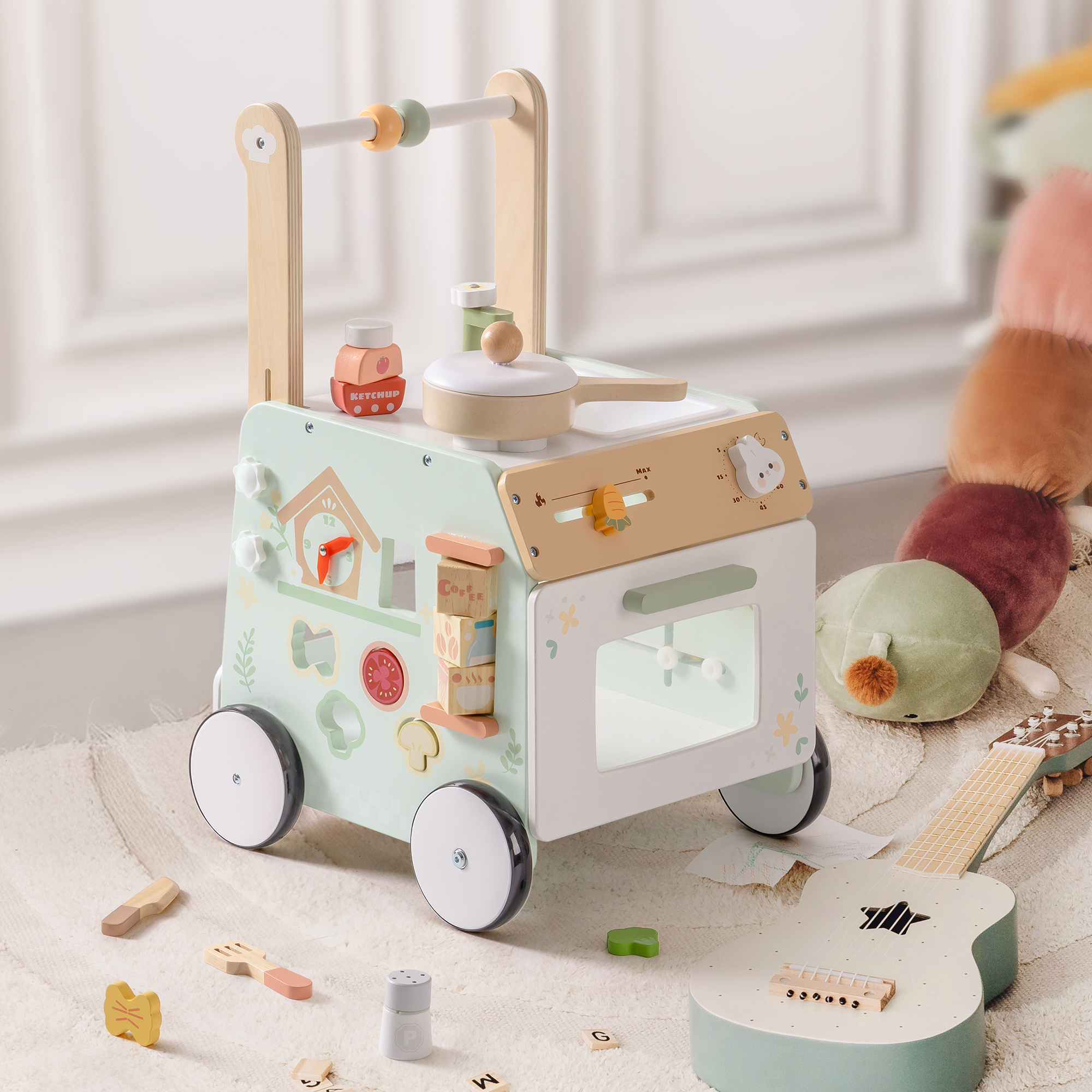
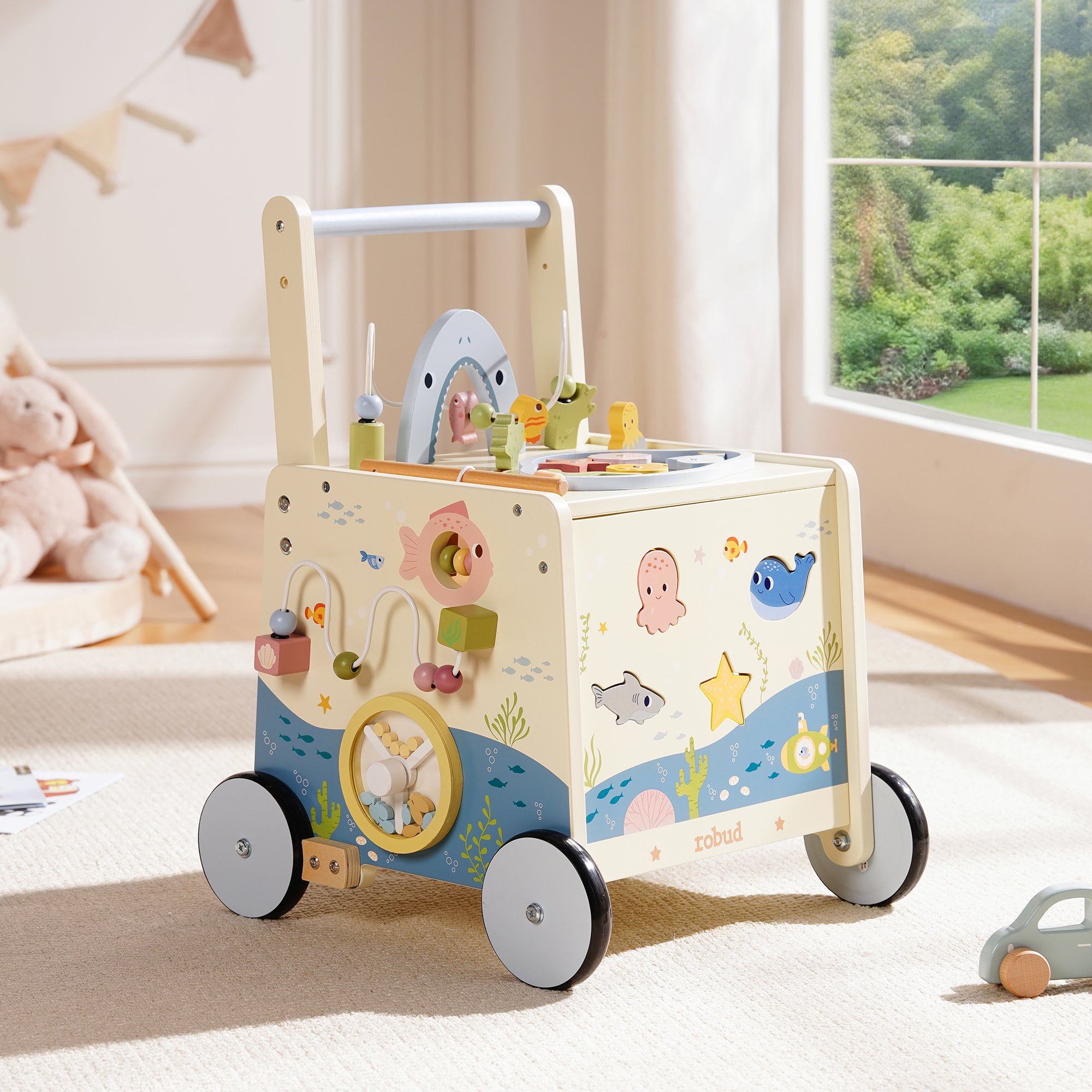
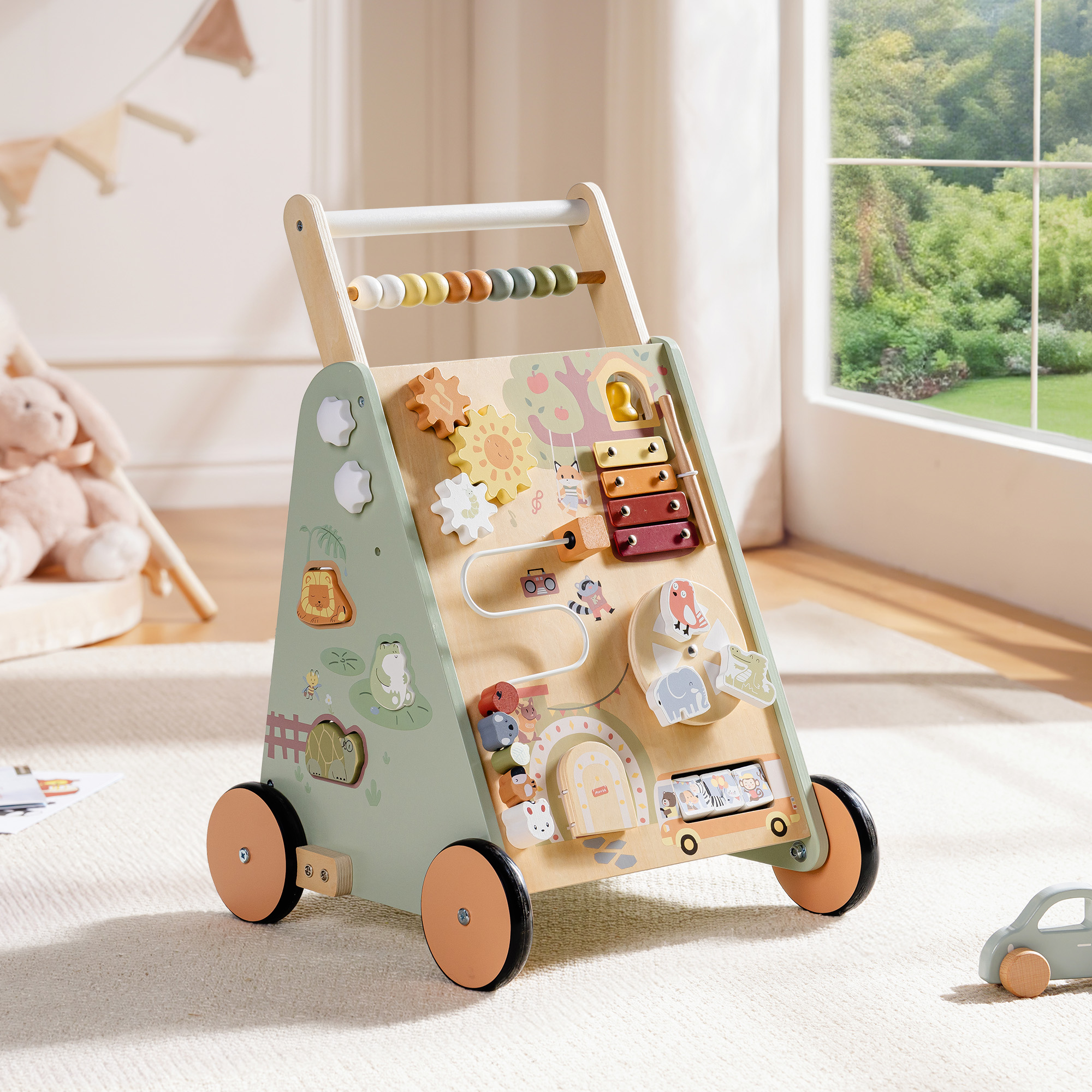
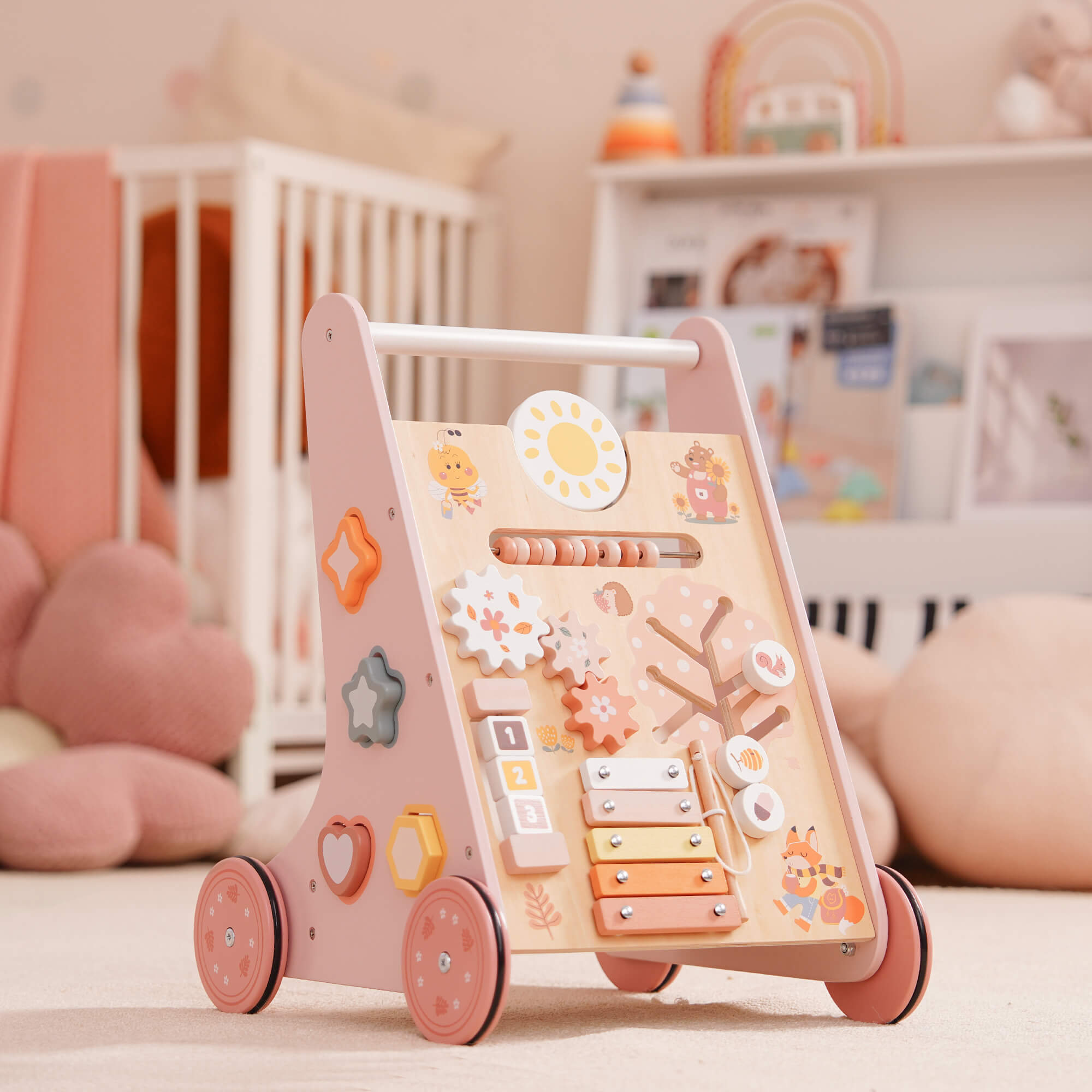
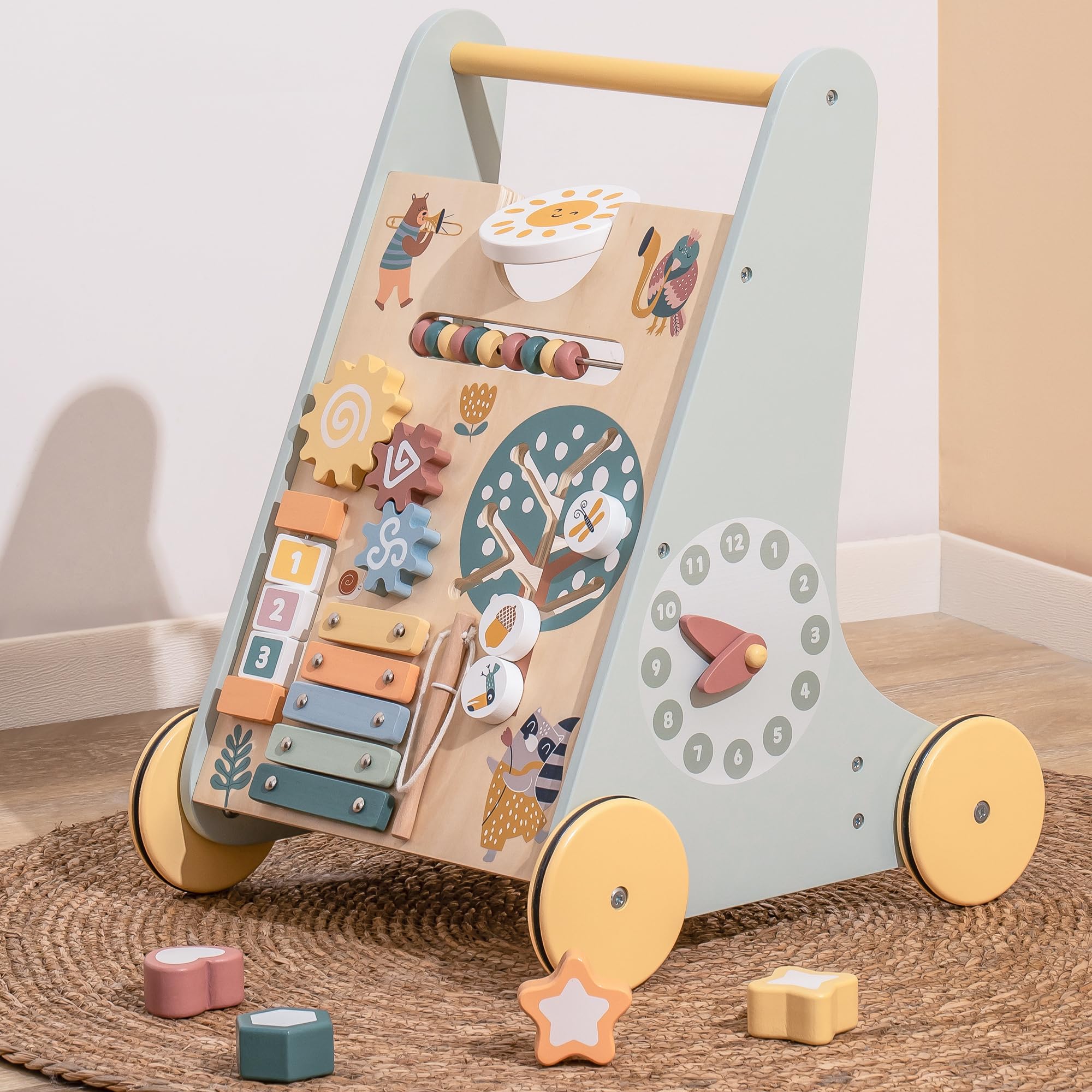
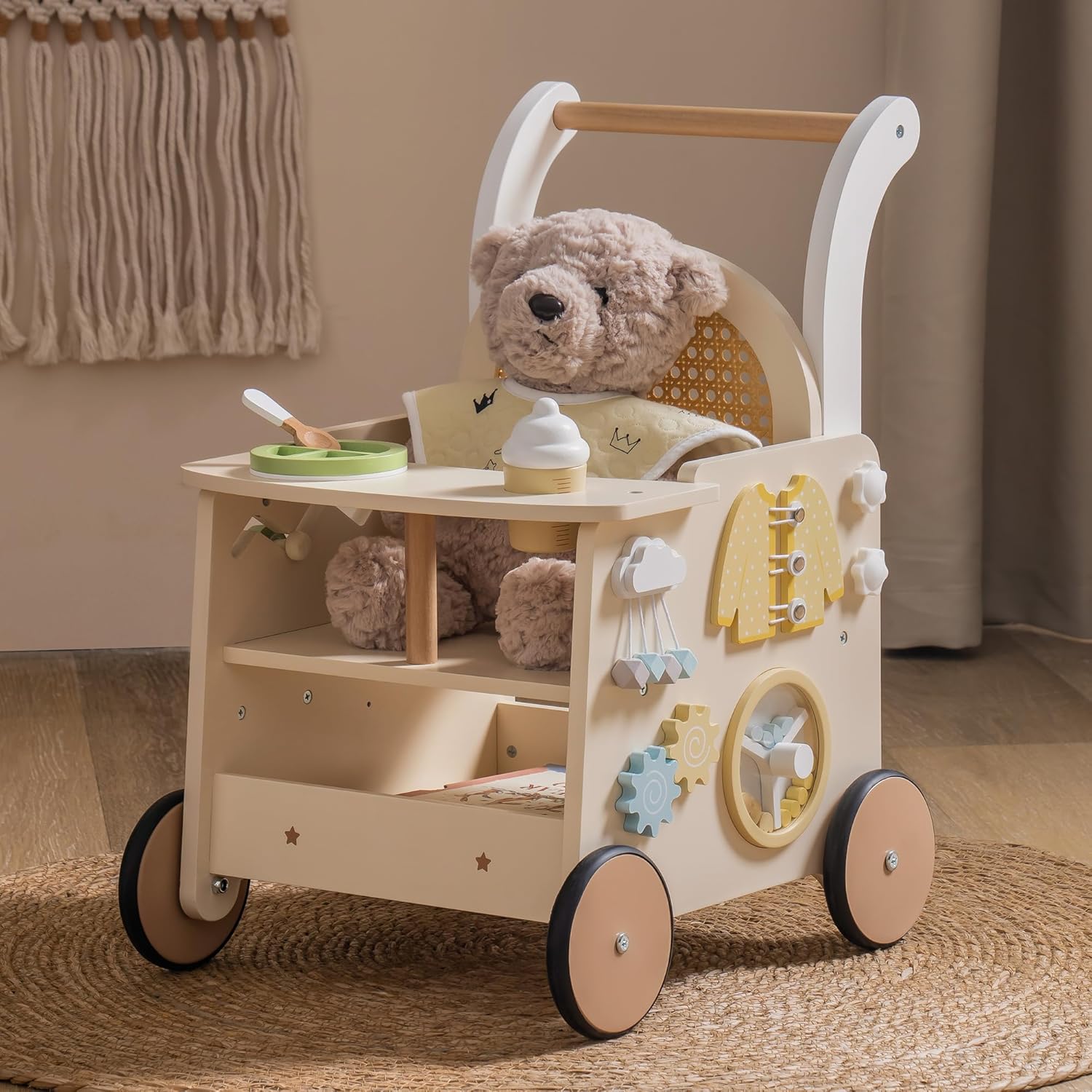
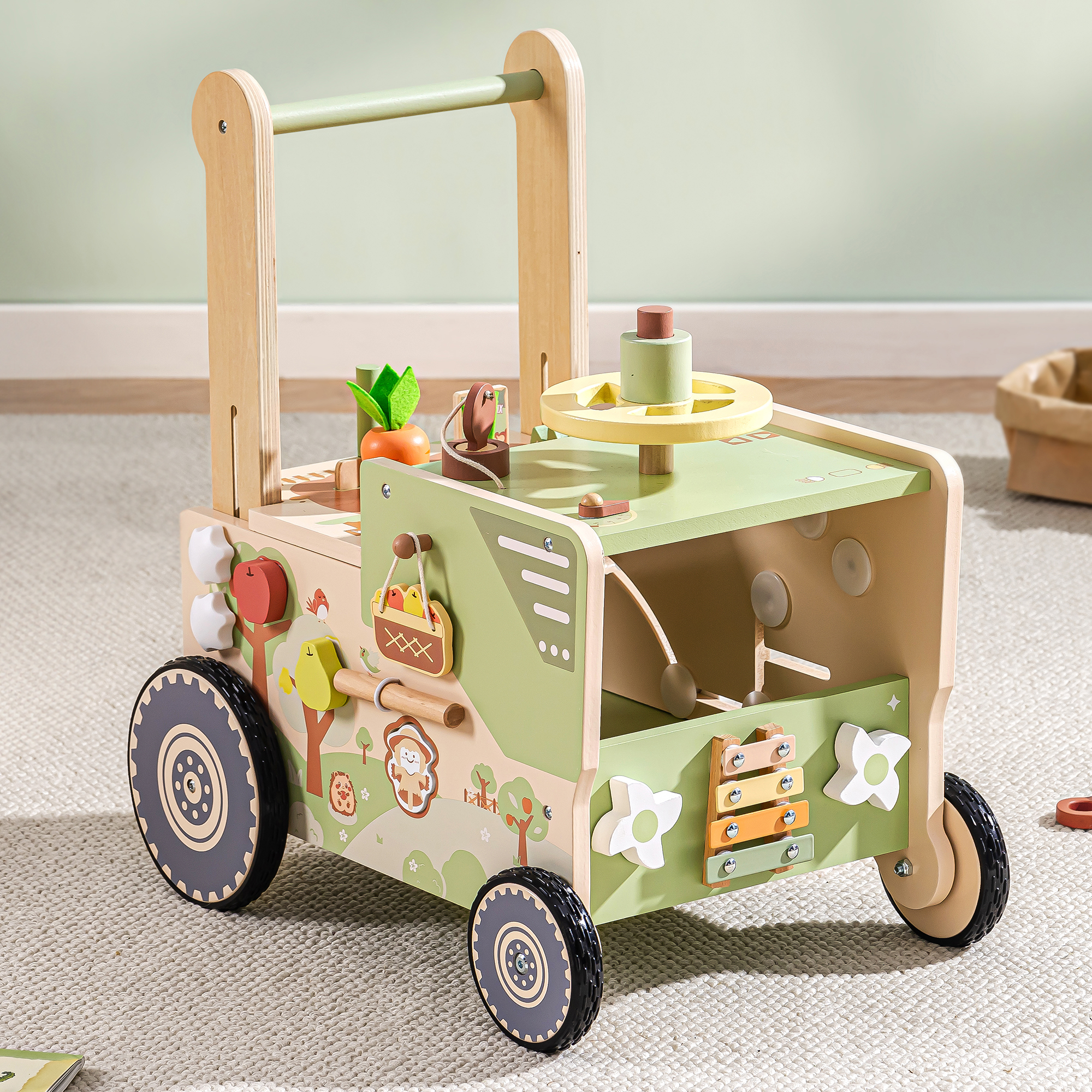
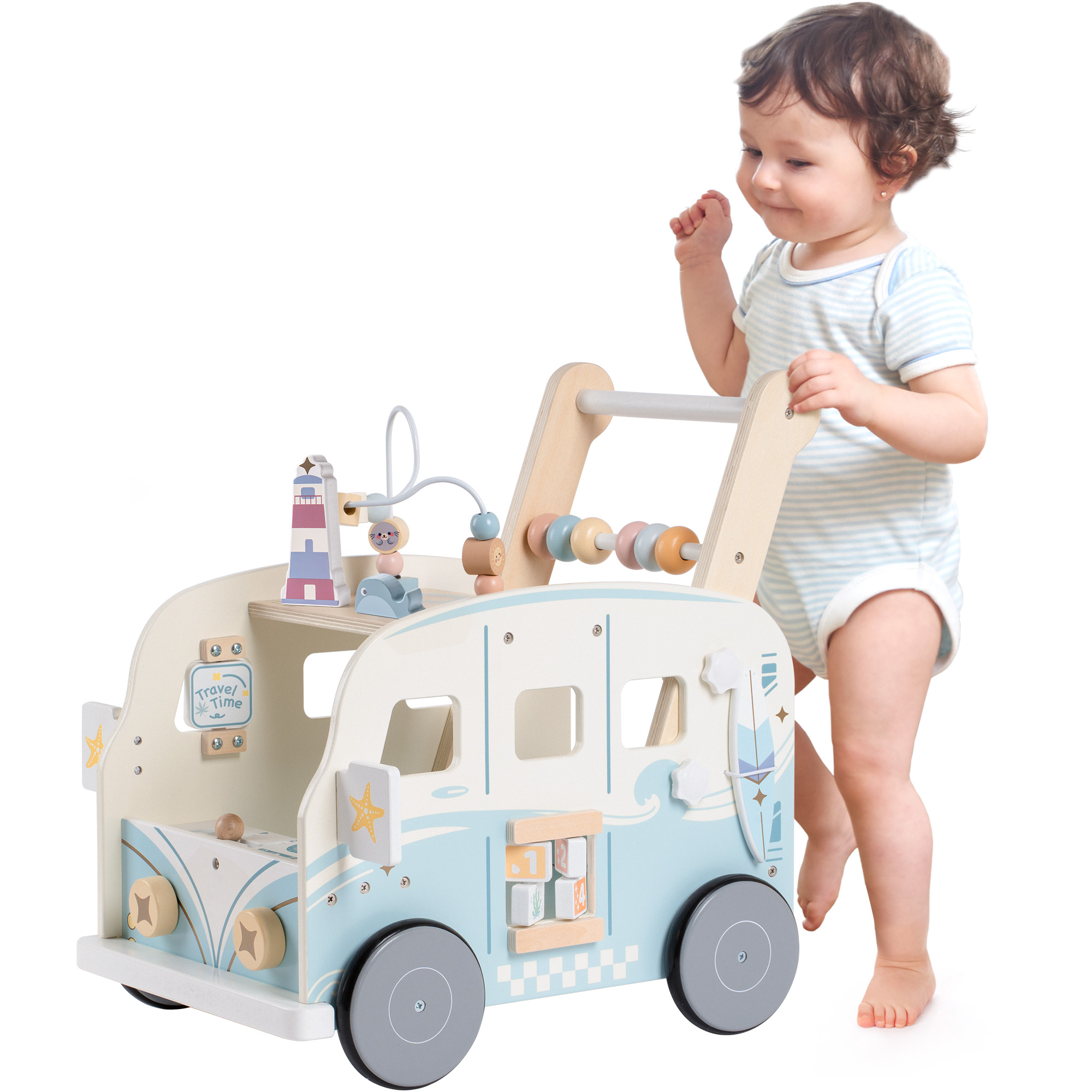
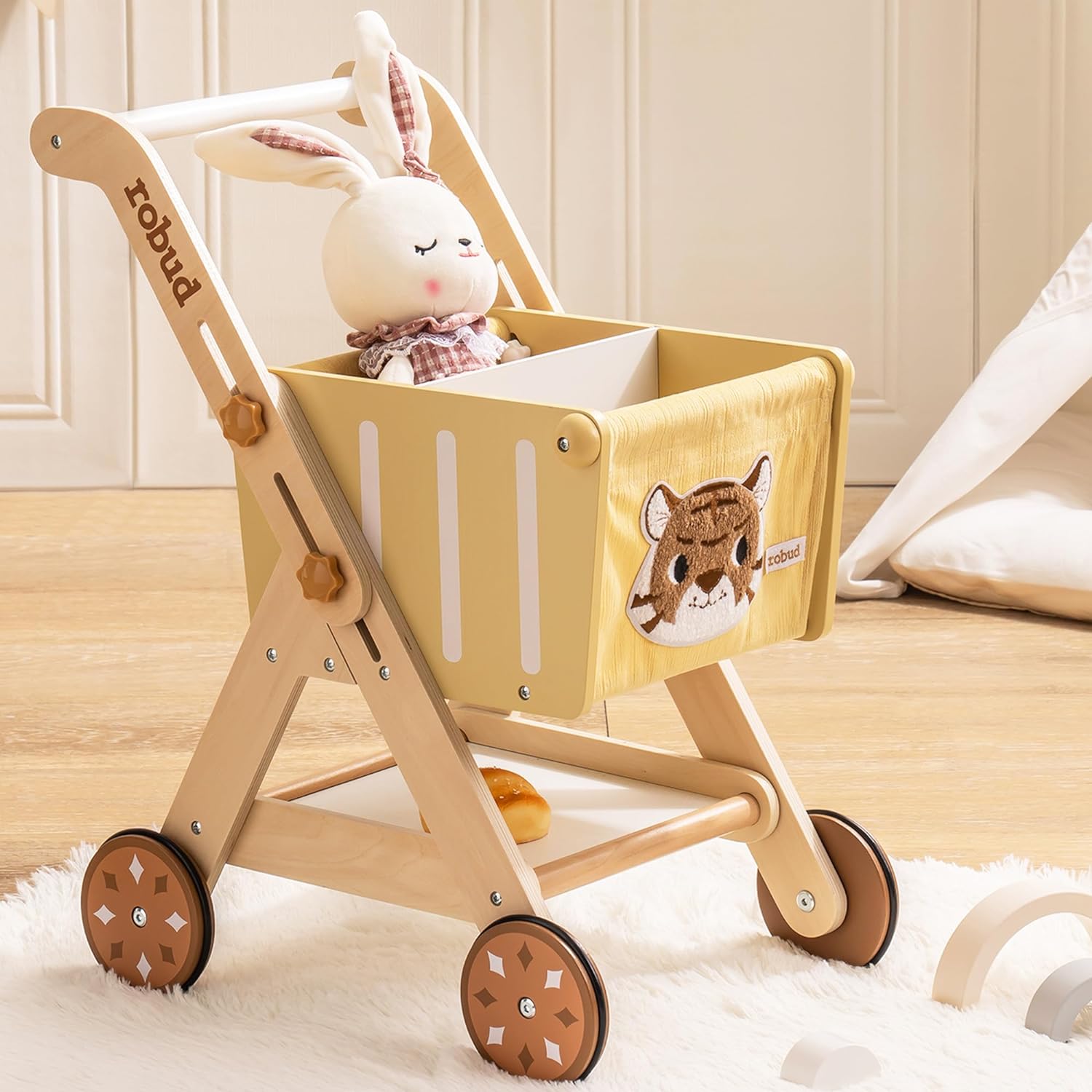
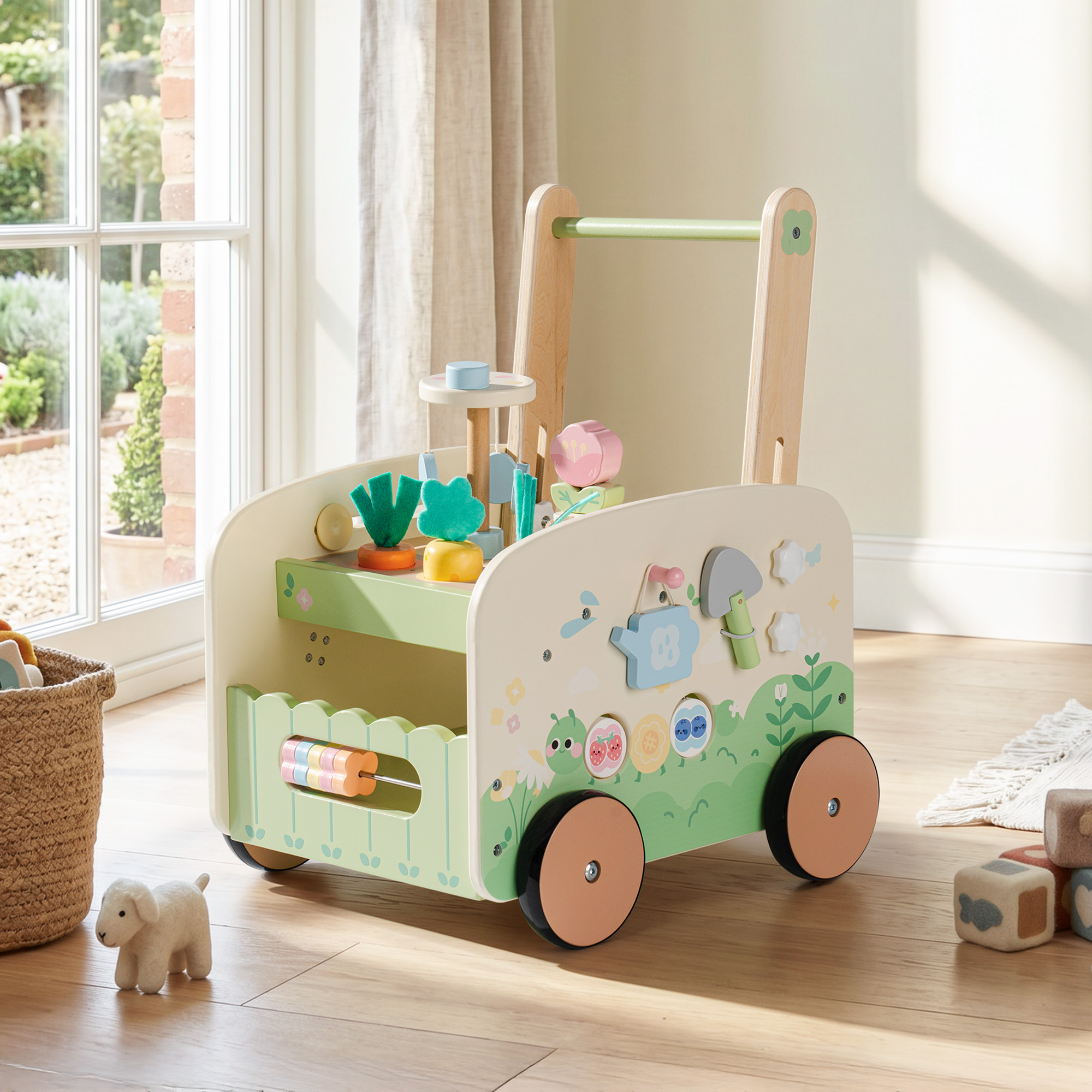
Each of these leans on the same core idea: a stable wooden frame that lets a baby stand, hold on, and move under their own power, with just enough play value to keep them coming back to it.
What About Wooden Push Walkers?
Wooden push walkers, like the ones in Robud's collection, typically add weight low in the frame, which helps with stability when a baby leans hard on the handlebar. They also tend to hold up better over time, since wooden frames don't crack or wear down as quickly as some plastic joints under repeated use.
There's also a simplicity to wooden walkers that a lot of parents prefer. Without flashing lights or battery-powered sounds, the toy relies on the mechanics themselves, gears that turn, beads that slide, wheels that roll, to hold a baby's attention. That tends to make for a calmer play experience and a walker that fits more naturally into a home's decor.
How to Use a Push Walker Safely
- Supervise every session: Never leave a baby alone with a push walker, even a stable one, since falls can still happen on uneven flooring
- Clear the path: Remove rugs, cords, and small objects from the area the baby will be walking in
- Keep it away from stairs: Set up a boundary or gate so the walker can't roll toward a staircase
- Check the weight limit: Push walkers are rated for a maximum weight, and exceeding it can affect stability
- Inspect it regularly: Look over screws, wheels, and joints occasionally, especially with wooden walkers that see daily use
Push Walker vs. Seated Walker: Which Should You Choose?
For most families, a push walker is the better choice. It supports the way babies naturally learn to walk, carries far fewer safety risks, and tends to have a longer play life once walking is mastered. A seated walker might get a baby moving faster in the short term, but that speed is exactly what makes it risky.
If your baby is pulling up to stand and cruising along furniture, that's usually the signal that a push walker is the right next step. If they're younger and you're looking for a way to keep them entertained while seated, a stationary activity center is generally considered a safer alternative to a traditional seated walker.
FAQs
What can a push walker help a baby practice?
A push walker doesn't speed up a baby's walking timeline. What it can offer is a supported way to practice standing, stepping, balance, and coordination once a baby is developmentally ready to stand and cruise on their own.
What age should a baby stop using a push walker?
Most babies naturally move on once they're walking confidently without support, typically somewhere between 12 and 18 months, though this varies by child.
Can a push walker tip over?
It's possible, especially on uneven surfaces or thresholds, which is why a wide wheelbase and low center of gravity matter when choosing one.
komentuoti