 United States
 United Kindom
 Canada
 Europe
 France
 Spain
Spain
 Italy
Italy
 Australia
Natural Wood Finish vs Painted Wooden Play Kitchen: Which Should You Choose?
Jul 21,2026 | Marian V. Obsuna
A wooden play kitchen isn't just another toy sitting in the corner of the playroom. It's where little chefs whip up imaginary feasts, siblings become restaurant owners, and stuffed animals gather for tea parties. Since these toys often become part of a child's daily routine for years, choosing the right one deserves more thought than simply picking the cutest design.
One of the biggest decisions parents face is whether to buy a natural wood finish or a painted wooden play kitchen. While both offer the same opportunities for imaginative play, they differ in appearance, durability, maintenance, and how they fit into your home.
If you're comparing the two, this guide will walk you through the pros and cons of each finish, helping you find the option that best matches your family's lifestyle, decorating preferences, and your child's play habits.
Why Finish Matters More Than Most Parents Think
At first glance, the finish on a wooden play kitchen might seem like a purely cosmetic choice. After all, children care more about pretending to cook than whether the wood grain is visible.
However, the finish influences several aspects of ownership, including:
- The overall appearance of your child's play space
- Resistance to scratches, stains, and everyday wear
- Ease of cleaning after messy play sessions
- How well the kitchen matches your home's interior
- Long-term durability and resale value
- The type of wood texture children interact with during play
Since a quality wooden play kitchen can last through generations, the finish becomes an important part of your purchasing decision.
What Is a Natural Wood Finish?
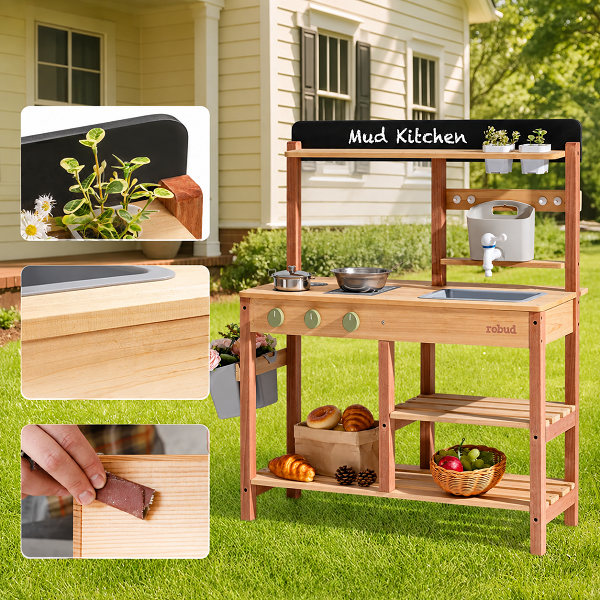
A natural wood finish showcases the wood's original grain, texture, and warm tones. Instead of being covered with colored paint, the surface is typically sealed with a clear protective coating that helps preserve the wood while allowing its natural beauty to remain visible.
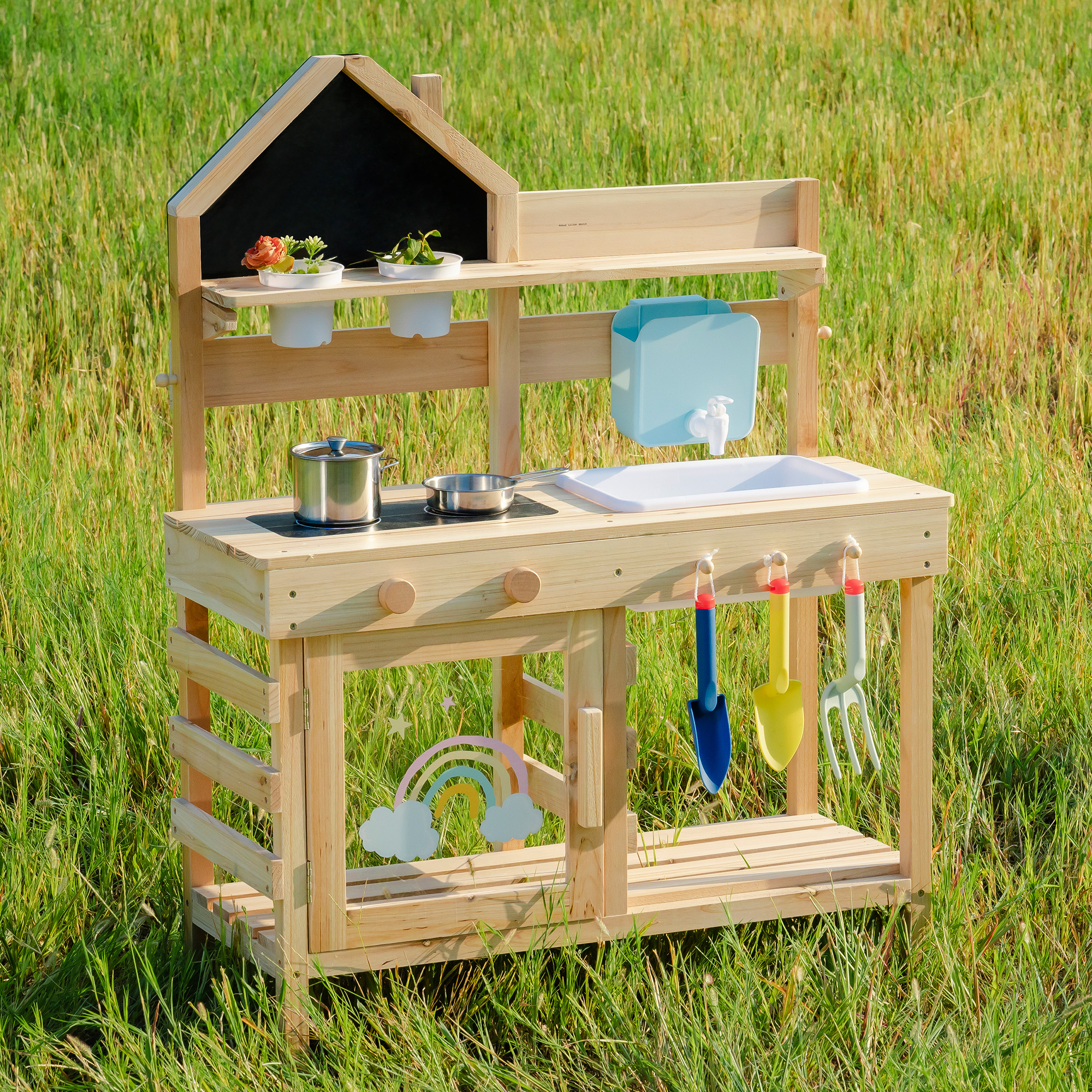
ROBUD Outdoor Mud Kitchen for Kids
Some manufacturers use water-based lacquer, natural oils, or non-toxic varnishes to protect the surface while maintaining the authentic appearance of the timber.
What Is a Painted Wooden Play Kitchen?
A painted wooden play kitchen features wood covered with colored, child-safe paint, creating a polished and playful appearance. These kitchens often include white cabinets, pastel accents, colorful backsplashes, or realistic appliance details that mimic full-sized kitchens.
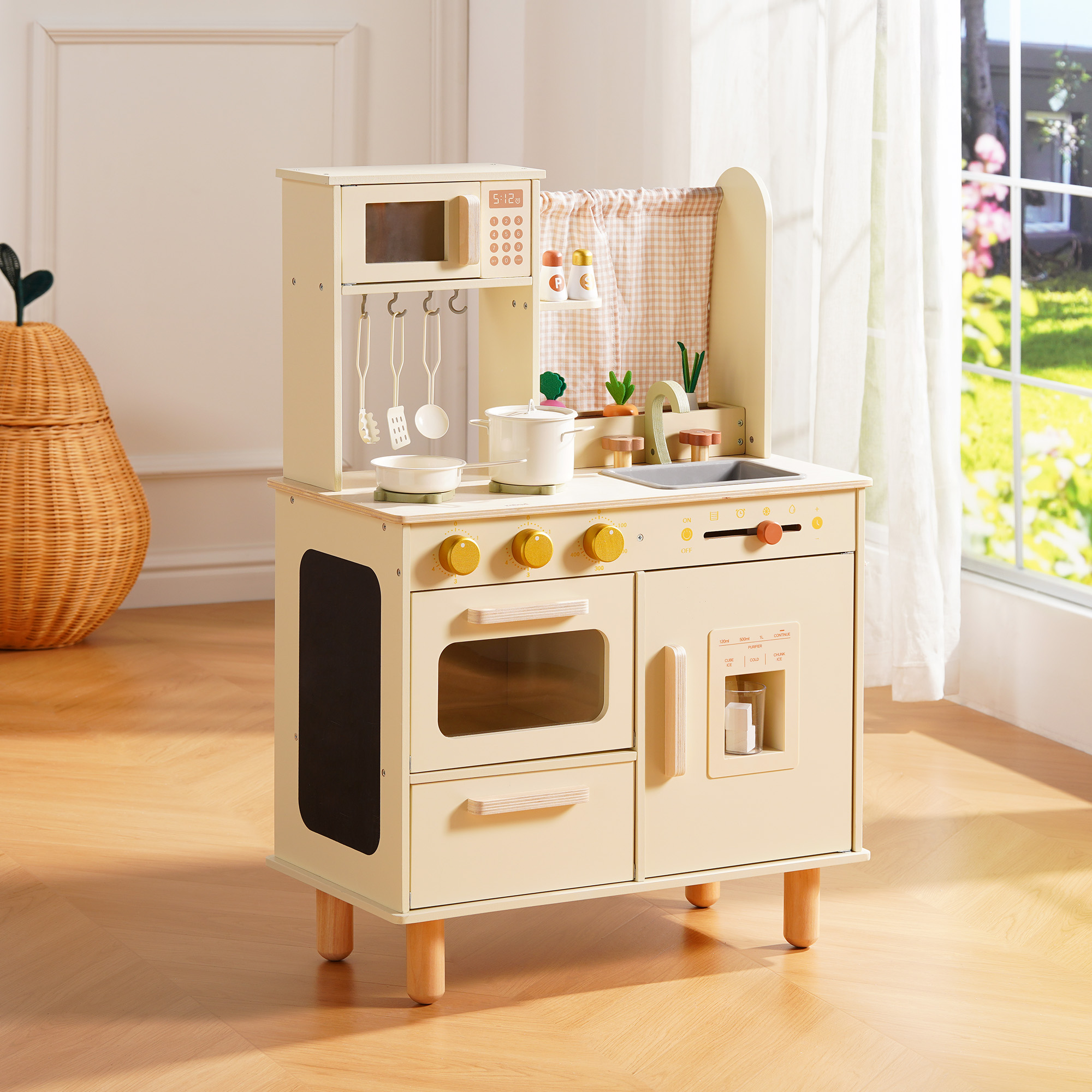
ROBUD Wooden Pretend Play Kitchen
Modern manufacturers typically use water-based, non-toxic paints that comply with children's toy safety standards.
Side-by-Side Comparison
| Feature | Natural Wood Finish | Painted Wooden Play Kitchen |
|---|---|---|
| Appearance | Warm, timeless, classic | Colorful, playful, decorative |
| Shows Wood Grain | Yes | No |
| Home Decor Compatibility | Excellent | Depends on color scheme |
| Scratch Visibility | Less noticeable | Paint chips can be more visible |
| Child Appeal | Calm, simple aesthetic | Bright and visually engaging |
| Maintenance | May need occasional resealing over many years | Easy to wipe clean but paint may chip over time |
| Customization | Easy to stain or personalize | Difficult to repaint neatly |
| Longevity | Ages beautifully with proper care | Durable but cosmetic wear may show sooner |
Which Finish Is Best for Different Families?
The best finish depends on your priorities rather than one option being objectively better than the other.
Choose a Natural Wood Finish If...
A natural wood finish is an excellent choice if you:
- Prefer timeless, neutral toys that blend into your home
- Love Scandinavian, Montessori, or minimalist interiors
- Plan to keep the kitchen for many years
- Want a piece that can be refinished if needed
- Appreciate the beauty of genuine wood grain
Parents looking for toys that transition well from nursery to playroom often find natural finishes especially versatile.
Choose a Painted Wooden Play Kitchen If...
A painted finish may be the better fit if you:
- Want a vibrant centerpiece for your child's play area
- Enjoy realistic kitchen details
- Prefer playful colors that excite young children
- Like matching toy themes with your child's room
- Want a kitchen that closely resembles a real one
Many younger children are naturally drawn to colorful kitchens because they immediately spark imaginative storytelling.
Looking for the Best of Both Worlds?
Some premium wooden play kitchens combine natural wood panels with painted accents. This hybrid design offers the warmth of exposed wood while adding enough color to keep the kitchen visually engaging.
For families who can't decide, these mixed-finish kitchens provide an appealing compromise.
For example, many Robud wooden play kitchens incorporate natural wood elements alongside soft, modern color palettes. This creates a balanced look that complements contemporary homes while still capturing children's attention through thoughtful design details rather than overwhelming colors.
FAQs
Is a natural wood finish safer than painted wood?
Not necessarily. Both can be equally safe when made with high-quality, child-safe materials and non-toxic finishes. Look for products that meet recognized toy safety standards and clearly state the paints or sealants used.
Which finish lasts longer?
Both finishes can last for years with proper care. Natural wood tends to hide everyday wear more gracefully and can often be refinished, while painted surfaces may show chips or scratches more noticeably over time.
Are painted wooden play kitchens difficult to clean?
No. Most painted play kitchens can be cleaned easily with a soft damp cloth and mild soap. Avoid abrasive cleaners or rough scrubbing pads, as they can damage the painted surface.
Which finish is better for Montessori-inspired playrooms?
Natural wood finishes are generally more popular in Montessori-inspired environments because of their simple, uncluttered appearance and emphasis on natural materials. However, a softly painted kitchen with muted colors can also fit well within this style.
Can painted wooden play kitchens fade over time?
High-quality, UV-resistant finishes help minimize fading, but prolonged exposure to direct sunlight can gradually affect both painted and natural wood surfaces. Placing the play kitchen away from strong, continuous sunlight can help preserve its appearance.
Which option has better resale value?
Well-maintained natural wood play kitchens often retain their appeal because their classic look transcends changing trends. That said, premium painted kitchens from reputable brands can also hold their value if the finish remains in good condition.
Final Thoughts
Whether you choose a natural wood finish or a painted wooden play kitchen, the most important factors are quality craftsmanship, child-safe materials, and a design that encourages years of imaginative play.
Natural wood finishes offer timeless elegance, age gracefully, and blend seamlessly into most homes. Painted finishes provide vibrant personality, realistic details, and visual excitement that many children love.
Neither option is universally better. Instead, the right choice depends on your home's style, your maintenance preferences, and what will bring the biggest smile to your child's face.
If you're investing in a wooden play kitchen built to last, focusing on sturdy construction, smooth finishes, and thoughtful design will matter far more than the color alone. For a broader buying checklist, see Robud's guide on how to choose the right play kitchen for your child.
Kommentti