 United States
 United Kindom
 Canada
 Europe
 France
 Spain
Spain
 Italy
Italy
 Australia
What Wood Is Used in Play Kitchens? Pine, MDF, Birch & Beech Explained
Jul 07,2026 | Marian V. Obsuna
A child’s play kitchen goes through a lot. One day it’s a bustling bakery; the next it’s a five-star restaurant serving imaginary soup to every stuffed animal in the house. Doors swing open a hundred times, toy pans crash onto countertops, and tiny hands lean, climb, stir, and “cook” for hours on end.
But behind every beautiful toy kitchen is one detail parents rarely think about until it’s time to buy: the wood.
The type of wood used in a play kitchen affects everything—from durability and safety to weight, appearance, and price. Some woods are lightweight and budget-friendly. Others are premium, long-lasting, and designed to survive years of imaginative play.
If you’ve ever wondered what the difference is between pine, MDF, birch, and beech wood in children’s furniture, this guide breaks it all down in plain English—so you can choose the right play kitchen with confidence.
Main Wood Types Used in Play Kitchens
Not all wooden play kitchens are built the same. Manufacturers often use different materials depending on the style, budget, durability goals, and overall design of the toy. Here are the most common wood types you’ll find in modern play kitchens.
1. Pine Wood
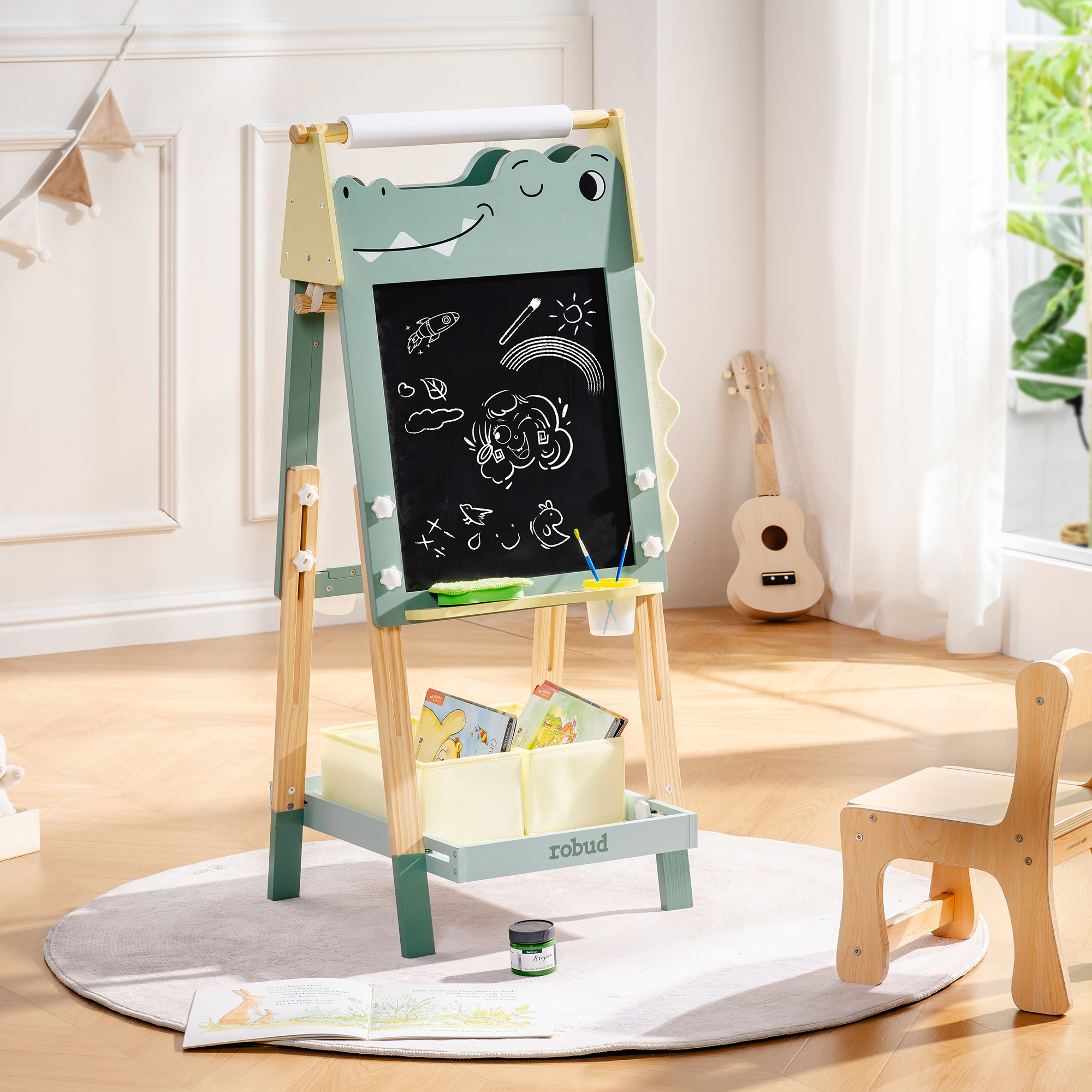
Pine Wooden Adjustable Crocodile Easel
Pine is one of the most popular woods used in children’s furniture and toys—and for good reason.
It’s a softwood that’s lightweight, affordable, and naturally attractive with its warm, rustic grain. Many Scandinavian-inspired play kitchens use pine because it creates a clean, minimalist aesthetic that looks beautiful in modern homes.
Why parents like pine:
- Lightweight and easier to move
- Natural wood appearance
- More affordable than hardwoods
- Eco-friendly when sustainably sourced
- Works well with painted finishes
Potential downsides:
- Softer surface can dent or scratch more easily
- May show wear faster over time
- Lower-end pine products sometimes feel less sturdy
Pine play kitchens are ideal for families who want a balance between affordability and natural wood charm.
2. MDF (Medium-Density Fiberboard)
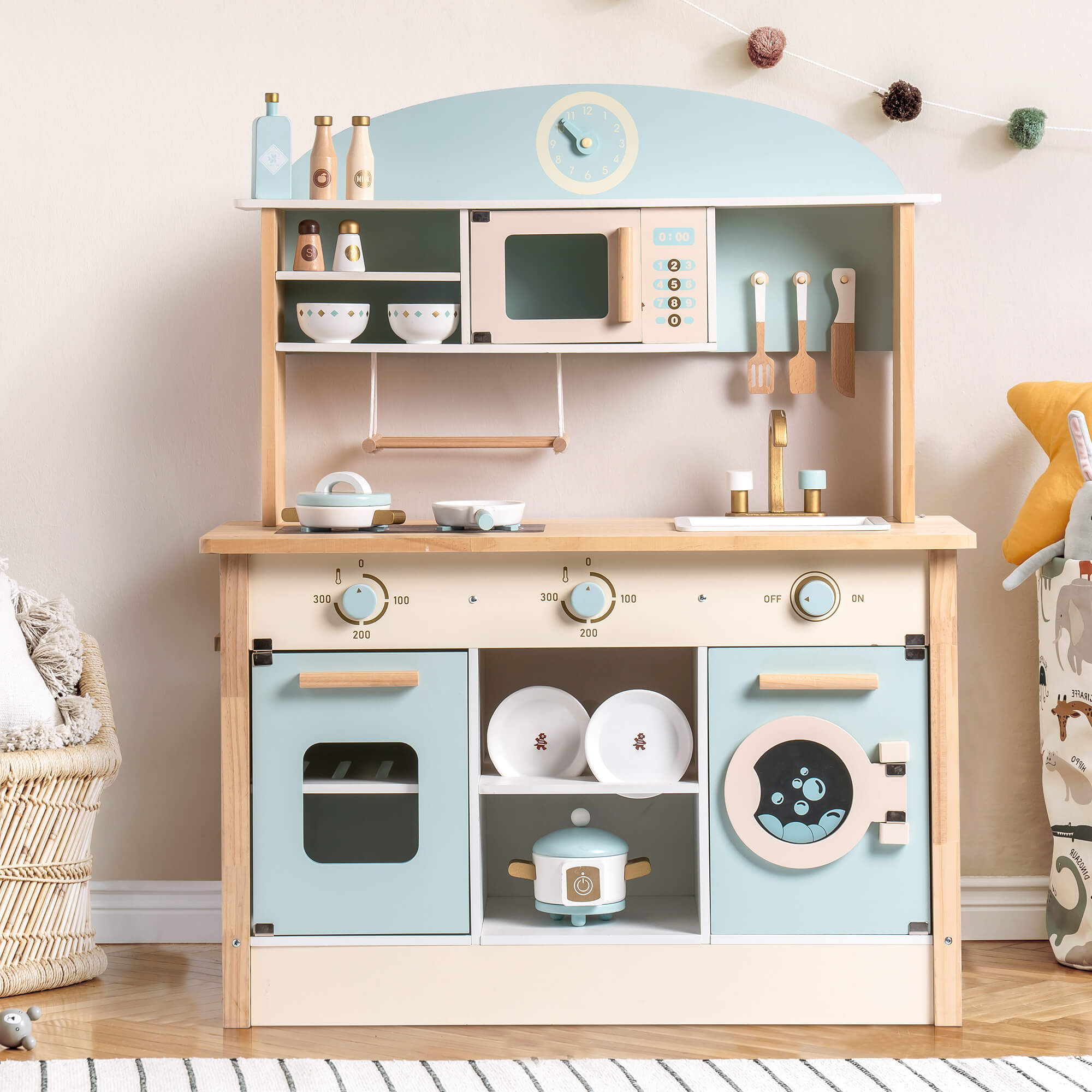
MDF Wooden Kids Play Kitchen Set
MDF stands for Medium-Density Fiberboard, an engineered wood product made from compressed wood fibers and resin.
This material is extremely common in children’s furniture because it creates smooth surfaces that are perfect for colorful painted designs. If you’ve seen a sleek white play kitchen with bright knobs and modern styling, there’s a good chance MDF was involved.
Why manufacturers use MDF:
- Smooth surface for paint
- More affordable than solid hardwood
- Resistant to warping and cracking
- Easy to shape into creative designs
- Creates consistent finishes
Potential downsides:
- Heavier than some natural woods
- Not as moisture-resistant if poorly sealed
- Lower-quality MDF can chip over time
High-quality MDF used in reputable children’s toys is typically sealed and tested for safety standards. The key is choosing trusted brands that use child-safe paints and low-emission materials.
3. Birch Wood
Birch is considered a premium material in many wooden toys and Montessori-style furniture pieces.
It’s a hardwood known for being durable, smooth, and visually elegant. Baltic birch plywood, in particular, is highly valued because it combines strength with a lighter weight compared to some heavier hardwoods.
Why birch stands out:
- Strong and durable
- Smooth, splinter-resistant finish
- Modern premium appearance
- Excellent for long-term use
- Often used in Montessori furniture
Potential downsides:
- More expensive than pine or MDF
- Premium models may cost significantly more
Birch play kitchens are often chosen by parents looking for long-lasting quality and timeless design.
4. Beech Wood
Beech is another hardwood commonly used in high-end children’s furniture and wooden toys.
It’s extremely strong, dense, and resistant to impact, making it one of the most durable materials available for play kitchens.
Why beech is premium:
- Exceptional durability
- Smooth, high-quality finish
- Resistant to dents and damage
- Long lifespan
- Often used in heirloom-quality toys
Potential downsides:
- Typically more expensive
- Heavier than softer woods
- Premium hardwood models can be harder to move
If you want a play kitchen that can survive multiple children and still look beautiful years later, beech wood is one of the best choices available.
The Safety Question Parents Actually Want Answered
Most parents are not woodworking experts. They simply want to know one thing:
Is this play kitchen safe for my child?
The answer depends less on the wood itself and more on the manufacturing quality.
Here’s what truly matters:
Non-Toxic Paints and Finishes: Always look for child-safe, water-based, or non-toxic paint finishes. Reputable brands follow international toy safety standards to ensure coatings are safe for children.
Smooth Edges and Splinter-Free Surfaces: Well-made wooden play kitchens should have rounded corners and smooth sanding to prevent splinters or sharp edges.
Low-Emission Materials: If the kitchen uses MDF or engineered wood, check whether it meets low formaldehyde emission standards. Trusted manufacturers often highlight this clearly.
Strong Construction: A sturdy frame is essential—especially for toddlers who may lean, pull, or climb on the kitchen during play
Safety Certifications: Look for certifications such as ASTM, EN71, and CPSIA compliance. These certifications indicate the toy has been tested for safety requirements.
Which Wood Should You Actually Buy?
The “best” wood really depends on your priorities.
Quick material match:
Choose Pine If...
- You want an affordable natural wood option
- You prefer lightweight furniture
- You love minimalist or Scandinavian aesthetics
Choose MDF If...
- You want colorful, modern designs
- You are shopping on a tighter budget
- You prioritize style and smooth, painted finishes
Choose Birch If...
- You want premium quality with modern elegance
- You value durability without excessive weight
- You are investing in long-term use
Choose Beech If...
- You want maximum durability
- You prefer heirloom-quality furniture
- You expect years of heavy play
For many families, the best play kitchens actually combine materials. A brand may use solid wood for structural strength while incorporating MDF panels for colorful design elements and affordability.
That combination often delivers the sweet spot between durability, safety, appearance, and value.
FAQs
Is MDF safe for children's play kitchens?
Yes, high-quality MDF can be safe when used by reputable manufacturers that follow toy safety regulations and use low-emission materials with non-toxic finishes. Always choose trusted brands that comply with recognized safety standards.
Is solid wood always better than MDF for play kitchens?
Not necessarily. Solid wood is often more durable, but MDF offers smoother painted finishes, lower costs, and greater design flexibility. Many excellent play kitchens combine both materials for the best overall performance.
How long should a wood play kitchen last?
A well-made wooden play kitchen can last anywhere from 5 to 15 years or more depending on the materials, build quality, and level of use. Hardwood models made from birch or beech tend to have the longest lifespan.
For parents comparing materials, the best choice is usually the one that balances safety, daily durability, room space, and the way your child actually plays.
Kommentar